Oregano is a spreading perennial herb valued for its aromatic leaves. Give culinary oregano a bright position, freely draining soil and enough space to branch. Water a newly planted oregano while its roots establish; once established, check the soil before watering again. Regular light harvests help keep the plant productive.
The key is to grow a healthy plant with useful, aromatic leaves. A huge plant fed heavily and kept constantly damp is not the goal, but neither is a plant pushed into drought. This guide shows how to choose the right oregano, grow it in a bed or pot, and harvest it without weakening it.
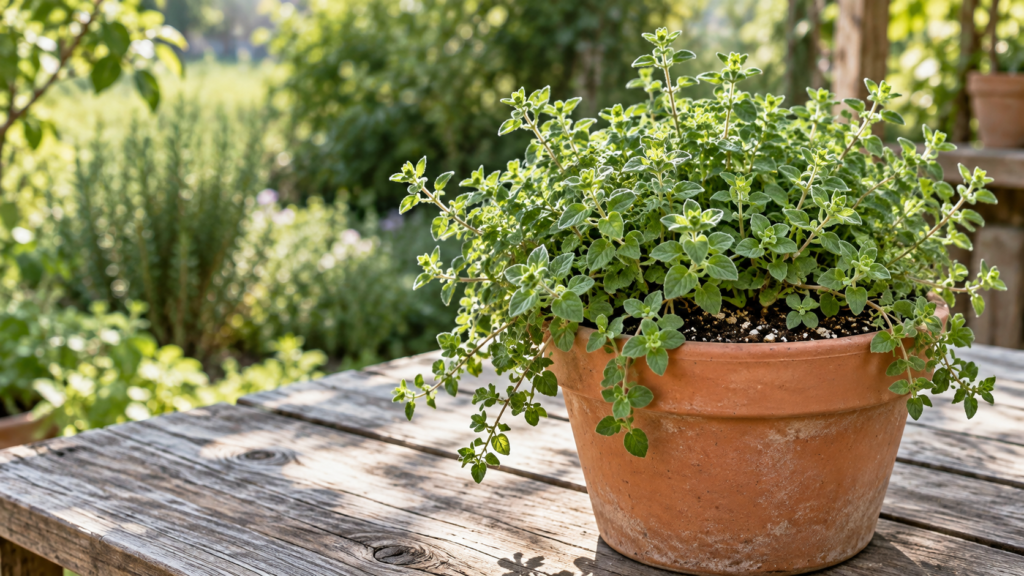
Oregano quick facts
| Question | Practical answer |
| What is it? | A perennial herb in the Origanum genus; culinary oregano is commonly sold as Origanum vulgare or a named form. Check the plant label because flavour varies. |
| Best light | A sunny, open position is the best starting point. In hot districts, watch container heat and the plant’s response. |
| Soil | Freely draining soil or quality potting mix; avoid a crown that stays wet. |
| Water | Water after planting, then respond to soil moisture, weather, pot size and new growth rather than a fixed calendar. |
| Habit | Low, spreading and sometimes woody at the base; allow room or contain it in a pot. |
| Harvest | Take healthy leafy stems during active growth; harvest young plants lightly. |
| Main beginner mistake | Treating established oregano like a thirsty soft-leaf herb and keeping its roots continuously wet. |
What oregano is and why grow it
Oregano is a member of the mint family, but “oregano” on a nursery label can cover several species, subspecies and cultivars. The familiar culinary forms have small aromatic leaves and spreading stems. Some ornamental forms are grown as much for foliage or flowers as for cooking, so taste or smell a leaf and read the botanical label before choosing a plant for the kitchen.
A healthy oregano plant offers fresh leaves for tomato sauces, roast vegetables, pizza and marinades. You can also dry a harvest for later use. Repeated light picking during active growth encourages branching; flowers can attract visiting insects if you let some stems bloom. In a suitable position, the plant returns from year to year, although growth slows or dieback may occur in a cold winter or stressful wet season.
Is oregano right for your space?
Oregano is a good choice if you have a bright spot, drainage that works after rain, and room for a spreading herb. A container can limit its spread and let you adjust its position. A persistently waterlogged bed, deep shade or a humid, crowded corner is a poor starting place. In subtropical areas, drainage and airflow may matter more than trying to maximise every hour of direct afternoon sun.
Choose oregano for the kitchen
| Plant commonly sold | What to expect | Best reason to choose it |
| Greek oregano (Origanum vulgare subsp. hirtum) | Often selected for a robust culinary aroma; labels and individual plants can vary. | Strongly flavoured leaves for Mediterranean cooking. |
| Common oregano (Origanum vulgare) | Aromatic perennial with variable flavour and growth habit. | An adaptable culinary herb when you can assess the actual plant. |
| Golden or ornamental oregano forms | Attractive foliage or flowers; culinary flavour may be milder. | Appearance and pollinator value, with cooking use checked plant by plant. |
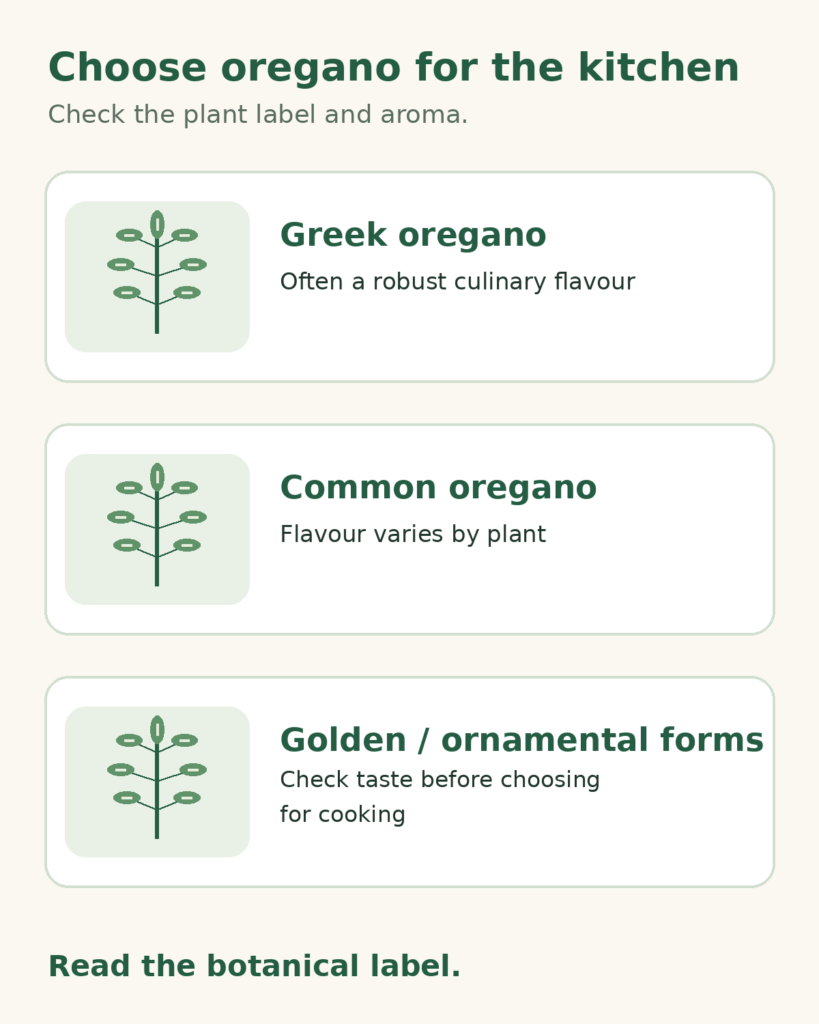
Buy a named, healthy plant when a particular flavour matters. Seed-grown oregano may differ from its parent. Greek oregano is a useful first choice for cooks, but the name alone does not guarantee the strongest plant in every nursery batch. Sweet marjoram is closely related yet has a different, milder flavour; it is not a direct substitute for a robust oregano planting.
Where and when to plant
Sunlight and local climate
Choose a site with plenty of direct light and good airflow. A sunny position usually supports compact growth and a useful harvest. In very hot weather, a pot against reflective paving can heat more sharply than an open garden bed. Check the plant, potting mix and afternoon exposure before assuming it needs either more shade or more water. The Herb Sunlight Reference Guide explains how to count direct-sun hours and assess the site.
Plant when the weather allows roots to establish without prolonged waterlogging, severe frost or extreme heat. Spring is a practical starting point in many temperate areas, but Australian climates vary: a Brisbane wet summer is different from a cool, dry southern summer. Follow local conditions and the nursery plant’s needs rather than a single nationwide calendar.
Drainage, soil and airflow
Oregano needs roots with access to air. A bed that remains soggy after rain is a poor choice even if it receives ample sun. Use a raised bed or a different position when drainage is persistently poor; adding a small amount of sand to a planting hole does not fix a waterlogged site. In pots, use drainage holes and a quality potting mix suitable for herbs or edible plants. Avoid packing the plant tightly against vigorous neighbours that block light and airflow. For wider soil decisions, see Best Soil for Herbs.
Plant oregano in a garden bed
- Choose a bright, well-drained position with room for the plant to spread.
- Loosen the planting area and check that water does not linger after rain. If it does, choose a raised bed or another site.
- Remove the plant carefully from its nursery pot. Set the top of the root ball level with the surrounding soil; do not bury the crown.
- Water the root ball and surrounding soil to settle it after planting.
- During establishment, check moisture around the root ball rather than assuming that a dry-looking surface tells the whole story. Let excess water drain away.
Mulch can moderate temperature and reduce weeds, but keep it clear of the stems and crown. Leave space between plants to preserve airflow and access for harvest.
Grow oregano in a pot
A pot is useful on a balcony, in a small garden or where the ground stays wet. Choose one with drainage holes and enough room for the roots and spreading stems. A container around 25–30 cm wide is a practical starting size for one established nursery plant, but match the pot to the plant rather than moving a tiny transplant into a huge volume of wet mix. Use fresh quality potting mix, and avoid leaving the pot standing in water.
Place it where it receives useful direct light. Check moisture more often in hot or windy weather because a pot can dry faster than a garden bed. Conversely, a large pot in cool weather may stay damp for longer. Water thoroughly when the mix at root depth is becoming dry, then allow excess water to drain. Growing Herbs in Pots covers the broader container decisions.
Can oregano grow indoors?
It can, but a dim kitchen bench rarely supplies enough light for strong growth. Use the brightest suitable window or an appropriate growing light, with good airflow and a pot that drains. Rotate the plant if it leans, check for indoor pests, and harvest sparingly when growth is slow. An outdoor pot is usually easier when your climate and space allow it.
Care for established oregano
Water by checking the root zone
A newly planted oregano and an established one do not have identical water needs. Check below the surface near the root ball. If it is still moist, wait and check again; if it is drying and the plant needs water, water the root zone thoroughly and let it drain. Weather, soil, pot size and season change the interval. Wilt in hot afternoon sun alone is not proof of drought: check the mix and whether the plant recovers later. The Herb Watering Guide explains the moisture check in more detail.
Feed moderately
Oregano rarely needs heavy feeding in a reasonably fertile bed. If growth is weak, first check light, drainage, root space and season before adding fertiliser. In a pot, nutrients eventually run down; refresh the mix or feed modestly according to the product label when active growth and plant condition warrant it. Excess fertiliser can produce soft growth, but a starved plant will not give a good harvest either. Judge the result by healthy new shoots and useful aroma, not by size alone.
Prune without stripping the plant
During active growth, snip leafy stems above a set of leaves or branching point. This encourages side shoots and keeps harvesting convenient. Remove dead or damaged stems, thin crowded growth and trim spent flower stalks when leaf production is the priority. Do not cut hard into old bare wood without checking for living shoots below the cut. Avoid severe pruning immediately before a cold spell or when a plant is stressed and not growing.
If the centre becomes woody and unproductive, replace the plant or take healthy cuttings from younger stems. Some spreading plants can be lifted and divided in suitable weather. Pruning maintains useful growth; it cannot repair waterlogged roots or an unsuitable position.
Harvest oregano for flavour
Harvest once the plant has enough leafy growth to keep recovering. Take a few stems from several areas rather than removing every shoot from one side. A cautious upper limit for a healthy established plant is around one-third of its leafy top growth in one session; take less from young, newly moved or slow-growing plants. Morning after dew has dried is convenient for a larger harvest. For drying, many growers cut before or as flower buds open, when leaves are aromatic; use your senses, because flavour varies by variety and conditions.
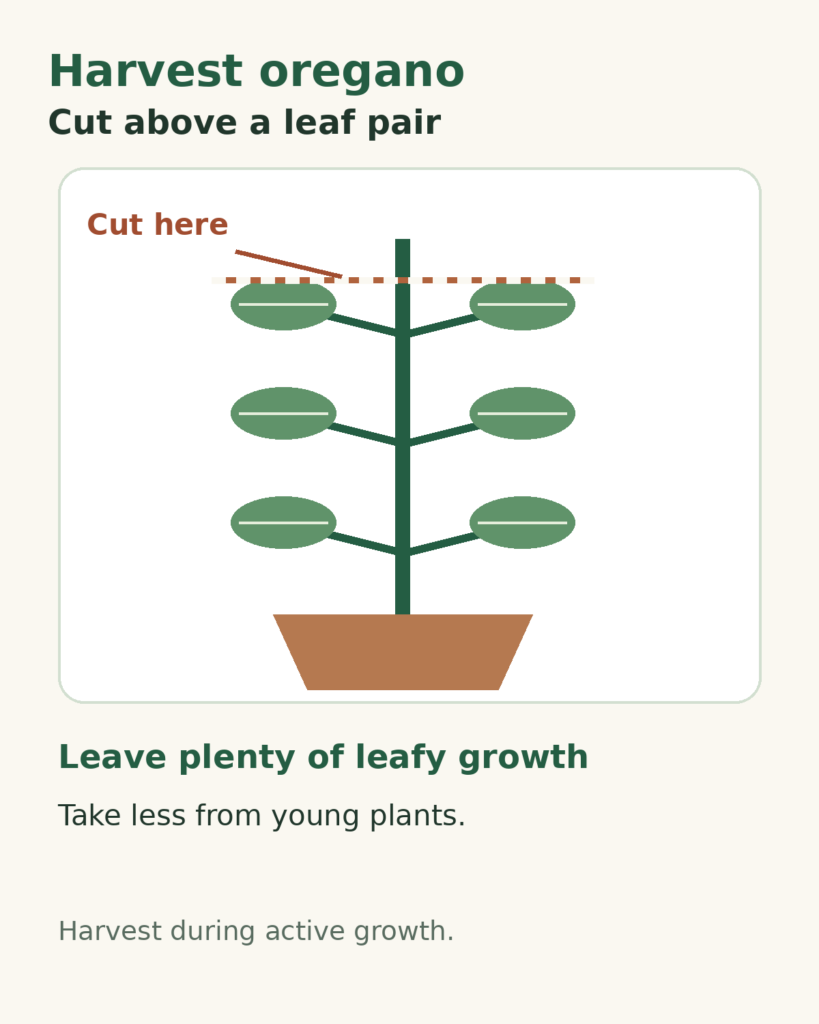
You can let some stems flower for visiting insects and still pick other leafy stems. If steady leaf production matters more, trim flowered stems and allow new shoots to grow. Regular modest harvests are more useful than waiting until the plant becomes an overgrown tangle.
Use, dry or freeze the harvest
Fresh oregano can go into tomato dishes, roasted vegetables, dressings and marinades. Dried oregano has a different, often more concentrated flavour, so start with less and adjust to taste. For drying, use clean, healthy stems; tie small, loose bunches or spread leaves in a single layer in a dry, airy place out of direct sunlight. Make sure the leaves are fully dry before storing them in a clean airtight container in a cool, dark cupboard. Discard any material that becomes damp or mouldy.
For freezing, wash only if needed, dry the leaves thoroughly and freeze chopped leaves or small portions in a suitable freezer container. Label the date. Use frozen herb portions directly in cooked dishes; their texture will be softer than fresh leaves. Avoid leaving homemade herb-in-oil mixtures at room temperature; use an established food-safety method for storage.
Propagate and renew oregano
For a cutting, choose a healthy, non-flowering young shoot. Remove the lower leaves, insert the bare stem in a free-draining propagation mix, water it in and keep it in bright sheltered light while roots develop. Keep the mix lightly moist rather than saturated. Move it into stronger sun gradually once it has roots and new growth.
A mature spreading clump may be divided when conditions favour establishment. Each division needs roots and healthy shoots; replant promptly and water it in. Seed is another option, but seedlings can vary in flavour. Cuttings or divisions from a plant you already like preserve its characteristics more reliably.
Diagnose common oregano problems
| What you see | Possible causes | First check and response |
| Yellow leaves, limp stems and damp soil | Waterlogging or root stress; other causes are possible. | Check below the surface and the drainage path. Allow the root zone to drain; inspect roots if decline continues. |
| Long, sparse growth | Too little light, crowding or seasonal slow growth. | Count direct-sun hours and assess neighbouring shade before moving gradually to a brighter spot. |
| Weak aroma | Variety, maturity, light, recent weather or excess soft growth. | Identify the plant, review exposure and harvest a healthy leaf; do not deliberately drought-stress it. |
| Brown, crisp edges or afternoon collapse | Heat, a dry pot, sudden sun exposure or root trouble. | Check moisture at depth and recent changes before watering or shading. |
| Woody, bare centre | Ageing or infrequent renewal. | Prune living outer growth, take cuttings or divide/replace when appropriate. |
| Spots, distorted leaves or visible insects | Pest or disease; identification matters. | Inspect both leaf surfaces, improve airflow and identify the problem before treating. |
If the soil remains wet and the plant is declining, use Root Rot in Herbs for a fuller check. Why Are My Herb Leaves Turning Yellow? helps when discolouration has several possible causes. Powdery growth on leaves has a separate pathway in Powdery Mildew on Herbs.
Frequently asked questions
Does oregano come back every year?
Many culinary oregano plants are perennial where conditions suit them. Cold, persistent wetness and local climate affect survival; above-ground growth may slow or die back seasonally. Check for healthy new growth before discarding a plant.
Should I let oregano flower?
Yes, if flowers and visiting insects are part of your goal. If you want a steady supply of tender leaves, trim some flowered stems and keep harvesting healthy vegetative growth. You can do both on the same established plant.
Why does my oregano have little flavour?
First check its variety and maturity, then light, growth and harvest timing. A golden ornamental form may taste milder than a selected Greek oregano. More fertiliser or harsher drought is not a reliable flavour fix.
Can I grow oregano in shade?
Light partial shade may support growth in some sites, but culinary oregano generally performs better in a bright position. Deep shade tends to give a poor harvest. In hot climates, assess afternoon heat separately from direct-light hours.
Is oregano invasive?
Most oregano spreads by stems and sometimes seed, though the extent depends on the form and conditions. Give it room, trim edges, remove unwanted seedlings or grow it in a container if spread concerns you.
Key takeaways
- Choose a culinary variety for flavour and check the nursery label.
- Start with useful sun, free drainage and airflow; adjust for local heat and wet seasons.
- Water new plants to establish, then check the root zone rather than following a calendar.
- Harvest and lightly prune during active growth without stripping a young or stressed plant.
- Preserve a surplus by drying or freezing it safely.
- Treat weak growth, yellow leaves and poor aroma as clues to investigate, not single-cause diagnoses.
Continue learning
Compare oregano with the published rosemary, thyme and sage guides. Use the Herb Sunlight Reference Guide, Herb Watering Guide and Best Soil for Herbs for the three decisions that most affect placement and care.