To fix leggy herbs, first identify the herb and growth stage, then check how much usable light it receives. Improve unsuitable conditions before deciding whether to pinch, trim or replace it. A stretched seedling, a woody rosemary plant and flowering coriander need different responses; height alone does not identify the cause. [1, 5, 7]
“Leggy” usually describes long stems with widely spaced leaves, weak support or a sparse appearance. This guide helps you recognise the pattern and choose a practical next step for herbs in pots, beds or seedling trays. If a stem is rotting or collapsing at soil level, deal with that problem before attempting to reshape the plant. [1]
🌿 In this guide
- 🌿 Quick facts
- 🛠 Recognise the growth pattern
- 🌱 Beginner checklist
- 🛠 Causes
- 🌿 Choose the next action
- 🛠 Fix leggy herbs
- 🌿 Prevent recurrence
- 📅 Seasonal timing
- ⚠️ Common mistakes
- 🌿 Frequently asked questions
- 🌿 Continue learning
🌿 Grow Herb Lab quick facts
| Check | What it tells you |
|---|---|
| Stem spacing and support | Compare with the same herb at a similar stage. Long gaps between leaves and weak stems may indicate stretching. [1, 2] |
| Actual light | Observe the growing position through the day; room brightness alone is a poor guide to what reaches the plant. [2] |
| Growth stage | Seedlings, established leafy herbs, woody plants and flowering crops need different treatment. [1, 4, 5, 6, 7, 8] |
| Stem base and foliage | Check for collapse, decay or other decline before assuming the plant only needs pruning. [1] |
| First response | Identify the pattern, correct relevant conditions, then use a species-appropriate action. |
| Recovery limit | Assess developing growth and plant stability. A heavily bare woody plant or failed seedling may need replacement. [1, 5, 6] |
🛠 Recognise leggy growth and distinguish lookalikes
Look at the whole plant, not just its tallest stem. Compare its form with the expected habit of that herb and variety. Some plants naturally grow upright, spread or trail, and flowering changes the shape of a leafy crop. The useful question is whether the growth is appropriate and well supported, rather than whether every herb looks like a compact bush.
| Observation | Possible explanation | First check |
|---|---|---|
| Thin, elongated young seedlings | Insufficient light after emergence; weak stems may eventually flop. [1] | Check the light, stem base and growing medium. |
| An indoor herb becoming stretched or sparse | Its position or long-term indoor conditions may be unsuitable. [2, 3] | Check shading and the herb’s growing requirements. |
| Older rosemary or sage with bare lower stems | Age and pruning history may have produced a woody, open structure. [5, 6] | Locate remaining leafy growth before cutting. |
| An extending flower stem on coriander or chervil | The crop may be moving into flowering rather than simply stretching for light. [7, 8] | Look for developing flower heads. |
| A seedling narrowed or decaying at soil level | Possible damping off; it is not a routine pinch-back problem. [1] | Inspect the base and nearby seedlings. |
| Tall or trailing growth that matches the variety | The plant’s normal habit may be mistaken for legginess. | Compare with a reliable species/variety description. |
These observations guide your checks; they do not prove a diagnosis from one symptom. Several problems can occur together. A stretched plant can also have unsuitable moisture conditions, so improving light does not remove the need to check its growing medium. [1]
🌱 Beginner checklist
- Identify the herb and whether it is a seedling, established plant or flowering crop.
- Compare its growth with the expected species and variety habit.
- Inspect the stem base, remaining leaves and any developing flowers.
- Observe light at plant level across the day, including shade from neighbouring plants.
- Check moisture and drainage before adding more water.
- Note recent feeding, heavy harvesting or a change of position.
- Choose the matching action below before cutting, repotting or restarting.
Why herbs become leggy or sparse
Insufficient usable light
Low light is a major cause of stretched seedlings. A windowsill that seems bright may still provide inadequate light for sturdy growth. Newly emerged seedlings need a suitable lighted position promptly; leaving them in a dim germination space can allow stretching to begin. [1, 12]
For established indoor herbs, assess distance from the window, obstructions and seasonal changes in sunlight. A plant can receive much less useful light after furniture is moved, a neighbouring plant grows or the sun’s path changes. Rotation can balance the direction of growth, but it does not supply missing light. [2]
Crowding and an unsuitable growing arrangement
One purchased pot can hold many basil seedlings rather than one established plant. The RHS notes that these densely planted pots may decline or flower quickly. Check how many plants are present and whether they have room to develop; do not assume the remedy is a larger pot for every struggling herb. [4]
Ordinary indoor conditions are also a limitation for some herbs. Gardening Australia identifies leafy herbs as more suited to short-term indoor growing than Mediterranean herbs such as rosemary and thyme. A well-lit room is not a guarantee of long-term success. Match the growing system to the herb instead of repeatedly reshaping an unsuitable plant. [3]
Woody structure and flowering
Older rosemary and sage can become straggly with bare sections. This is a different management problem from newly stretched, soft growth. Cutting back into bare woody stems may not produce the leafy renewal you expect. [5, 6]
Coriander and chervil can grow taller as they flower. Hot, dry conditions can accelerate this change, while chervil is naturally short-lived. Keeping the crop leafy for longer and maintaining a continuous supply are different goals. [7, 8]
Feeding is a condition to review, not the default cure
Extra fertiliser does not correct an unsuitable light position. Excessively fertile conditions can encourage lush herb growth, but a tall plant does not by itself prove overfeeding or deficiency. Review what has already been applied, the herb and its growing medium before changing the feeding routine. Use the fertilising herbs guide for that separate decision. [10]
🌿 Grow Herb Lab Framework: What should I change before I cut?
Use the observation to choose the response. The action should address the cause or growth stage, not simply make the plant shorter.
| Observe | Decide and act | Next guidance |
|---|---|---|
| Damaged stem base or continuing decline | Pause shaping; investigate the decline first. [1] | When to stop |
| Stretched growth with poor light | Improve species-appropriate light and growing space, then assess developing growth. [1, 2] | Growing conditions |
| Healthy, established branching herb | Use its harvest/pinch method while retaining foliage. Basil is the worked example. [4, 11] | Leafy herbs |
| Older bare woody stems | Use cautious species-specific trimming, or plan renewal where the structure is largely bare. [5, 6] | Woody herbs |
| Coriander or chervil flowering | Choose a leaf harvest, flowers/seed or a replacement crop. [7, 8] | Flowering crops |
How to fix leggy herbs
Start with the growing conditions
Choose a position suited to the particular herb. For an indoor pot, check the light that reaches the foliage rather than relying on the name of the room or window direction. In Australia, an unobstructed north-facing window can receive substantial sun, but trees, buildings, glazing and season alter the result. Follow the plant’s needs and the conditions you observe. [2]
If natural light is inadequate, suitable supplemental growing light may help. Follow the fixture manufacturer’s placement guidance and watch the plant’s response; do not copy a distance intended for a different lamp. Reduce shading or crowding where relevant. [1, 12]
When moving an indoor-raised herb outdoors, introduce the new conditions gradually. Start with a sheltered position and increase exposure as the plant tolerates it. Hardening off helps plants adjust to outdoor conditions; it does not make a frost-sensitive herb frost-hardy. [9]
Young seedlings
Address the light problem first. Handle weak seedlings gently and check moisture before watering. They need enough moisture to grow without remaining waterlogged; use the herb seedling watering guide for the practical moisture checks. [1]
Pinching a tiny stretched seedling is not the same operation as harvesting an established branching herb. Do not use it as an automatic fix. If a seedling is badly weakened or its base is decaying, a new sowing under improved conditions may be more practical than attempting cosmetic rescue. Seedlings affected by damping off seldom survive. [1]
Established leafy herbs
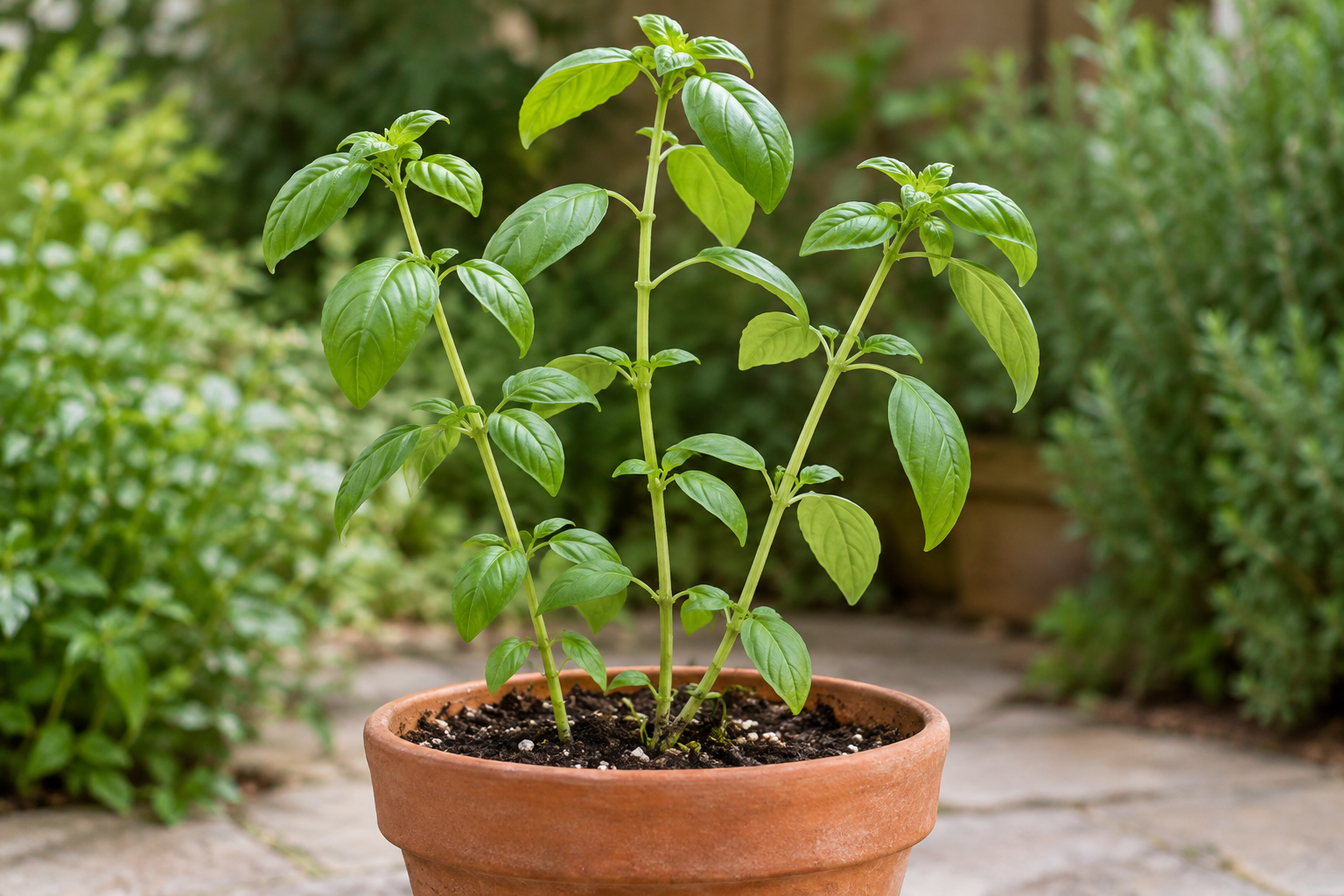
For healthy, established sweet basil, regular shoot-tip harvesting can encourage a more branched plant. A node is the point where leaves or branches arise on a stem. The RHS advises pinching basil tips just above a pair of leaves. [4, 11]
- Check that the plant is established, growing and carrying healthy foliage.
- Find a suitable leafy shoot and a pair of leaves below its tip.
- Remove the tip just above that leaf pair, using clean fingers or clean scissors.
- Retain healthy foliage on the plant; do not strip it to bare stems.
- Continue appropriate care and assess the new side growth before another harvest.
Use the basil growing guide for its broader care. This example is not a universal method for parsley, chervil, seedlings or woody herbs. Removing a tip cannot compensate for a persistently unsuitable growing position.
Woody herbs
For rosemary, lightly trim leafy growth after flowering rather than cutting deeply into bare old wood. For sage, the RHS recommends light spring pruning of established plants and warns that older bare stems may not reshoot. Adapt this seasonal advice to local growth and weather conditions. [5, 6]
Inspect the remaining foliage before taking the first cut. Where an old plant is largely bare and straggly, replacement may be more realistic than severe pruning. A healthy suitable shoot may provide propagation material, but a failing plant is not automatically a good source. Follow the individual herb’s propagation guidance. [5, 6]
Flowering annual crops
For coriander grown for leaves, removing developing flower stems can help prolong picking, but flowering remains part of the crop’s life cycle. Plan another sowing rather than relying on repeated cuts to keep one plant leafy indefinitely. Chervil also flowers naturally fairly quickly; cooler growing conditions and replacement batches are often the more useful approach. [7, 8]
You may instead allow a suitable plant to flower or set seed. That is a crop-management choice, not evidence that the plant needs a stronger fertiliser or a severe cut.
When to stop trying to reshape it
Stop routine trimming if the plant continues to decline, the stem base is damaged or you cannot identify the problem confidently. Seek advice from a local nursery or horticultural service when the diagnosis remains uncertain. Bring clear photographs and details of the herb, light, moisture and recent changes.
Restart severely failed seedlings with clean equipment and suitable fresh seed-starting medium; address the conditions that contributed to failure. For a largely bare old woody herb, plan a replacement rather than repeatedly cutting further into unresponsive stems. [1, 5, 6]
Prevent leggy growth returning
- Recheck the growing position after seasonal changes, relocation or increased shading. [2]
- Provide appropriate light promptly after seedling emergence. [1, 12]
- Allow plants the space their species and growing stage require; inspect densely planted purchased pots. [4]
- Harvest branching herbs in a way that retains useful foliage, and maintain woody herbs with species-specific light trimming. [4, 5, 6]
- Check moisture and feeding against actual conditions rather than increasing both whenever growth looks weak. [1, 10]
- Plan succession sowings for short-lived leaf crops instead of expecting one plant to remain productive indefinitely. [7, 8]
📅 Seasonal growing calendar
Use conditions rather than fixed months. Australia’s temperate, subtropical, tropical and arid growing situations do not share one pruning or sowing calendar.
| Local condition | Australian action |
|---|---|
| Shorter days or a newly shaded position | Reassess the light reaching indoor herbs; avoid relying on the position that worked in a brighter period. [2] |
| Suitable warmth and active growth | Use the relevant species’ harvest or light-trimming method while retaining healthy foliage. [4, 5, 6] |
| Hot, dry weather | Watch coriander and chervil for early flowering; review moisture and a cooler suitable cropping position. [7, 8] |
| Frost risk or an indoor-to-outdoor move | Protect tender herbs and acclimatise indoor-raised plants gradually. More exposure is not automatically better. [9] |
Northern Hemisphere adaptation: apply the same condition checks to your local seasons. Temperate seasonal patterns are broadly opposite to temperate Australia, but do not shift every instruction by six months. Local frost dates, day length, heat and the herb’s active growth should guide the decision.
⚠️ Common mistakes
| Mistake | Better approach |
|---|---|
| Assuming height proves low light | Check habit, flowering stage and stem health first. |
| Adding extra water or feed immediately | Check the medium and existing feeding routine before changing either. [1, 10] |
| Using one pruning fraction for every herb | Choose by species, growth stage and remaining foliage. [4, 5, 6] |
| Cutting woody herbs into bare stems | Check the leafy structure and renewal options before cutting. [5, 6] |
| Moving an indoor plant straight into harsh exposure | Acclimatise it gradually and consider frost sensitivity. [9] |
| Expecting the old stretched shape to disappear | Assess developing growth and support; consider appropriate shaping or renewal. |
| Trying to keep a flowering leaf crop young forever | Plan the next crop or choose to use the flowers/seed. [7, 8] |
🌿 Frequently asked questions
Does leggy always mean too little light?
No. Low light is important, especially for seedlings, but flowering and an older woody structure also need consideration. Compare the plant with its expected habit before choosing a remedy. [1, 5, 6, 7, 8]
Can the plant improve without pruning?
Sometimes improving the growing position is the first useful change. Assess the growth that develops afterwards. Pruning is a separate decision based on the herb, stage and remaining foliage, not a compulsory first treatment.
Should I pinch or plant stretched seedlings deeper?
Neither is a universal fix. Improve light and moisture management first, then follow that herb’s planting guidance. Advice about burying the stem of another crop should not be transferred automatically to a herb seedling.
Is flowering coriander or chervil simply leggy?
An extending flower stem can be part of the reproductive stage. Look for buds or flower heads and decide whether your priority is more leaf harvests, flowers/seed or a fresh crop. [7, 8]
Can I cut rosemary back into bare wood?
Avoid using that as a routine rescue method. Rosemary usually responds poorly to severe cutting into old bare wood. Light trimming of leafy growth or replacement of an old straggly plant is more realistic. [5]
Will turning the pot solve inadequate light?
Turning can help distribute the direction of growth, but it does not increase the light available in a dim position. Review the position itself. [2]
How should I judge progress?
Look at developing growth, healthy retained foliage and stability under suitable conditions. Do not use a universal recovery deadline or expect every herb to develop the same bushy shape.
🌿 Key takeaways
- Identify the growth pattern before treating the plant.
- Improve relevant growing conditions before deciding what to cut.
- Match pinching, trimming or replacement to the herb and its stage.
- Use renewal where it is more realistic than repeated rescue attempts.
🌿 What success looks like
For a plant that can improve, look for developing growth that is appropriately supported, retained healthy foliage and branching where the herb normally produces it. For a flowering short-lived crop or a heavily bare woody herb, success may mean a healthy replacement grown in more suitable conditions. A shorter plant is not, by itself, proof of better health.
🌿 Continue learning
🌿 Related growing guides
- Growing rosemary — care and renewal decisions for a woody herb.
- Growing chervil — cool growing windows and replacement leaf crops.
📚 Reference guidance
- Herb seed germination — plan a better start when a new sowing is the practical option.
🛠 Problem solving
- Root rot in herbs — follow a separate diagnostic path when poor root health is suspected.
📥 Free resources
Use the free Beginner Herb Growing Kit for practical starting checks and care references.
🌿 Final thoughts
Understand the growth pattern before trying to reshape the plant. A measured change that suits the herb is more useful than repeatedly cutting, watering or feeding without a clear reason.
Sources
1. University of Minnesota Extension — Troubleshooting seedling issues
2. ABC Gardening Australia — Light Up Indoors
3. ABC Gardening Australia — FAQs: herbs indoors
4. Royal Horticultural Society — How to grow basil
5. Royal Horticultural Society — How to grow rosemary
6. Royal Horticultural Society — How to grow sage
7. Royal Horticultural Society — How to grow coriander
8. Royal Horticultural Society — How to grow chervil
9. Royal Horticultural Society — Hardening off tender plants
10. University of Minnesota Extension — Growing herbs in home gardens
11. Royal Horticultural Society — Care tips for light-loving houseplants: sweet basil
12. University of Minnesota Extension — Starting seeds indoors