Introduction
Basil is one of the most productive and beginner-friendly herbs you can grow. It establishes quickly, responds well to pruning, and provides continuous harvests throughout the growing season.
However, despite its reputation as an “easy herb,” basil fails more often than it should. The reasons are consistent: poor watering practices, lack of pruning, and misunderstanding how it behaves in heat.
If you get those three factors right, basil becomes one of the highest-yield plants in your garden.
Basil Quick Facts
| Botanical name | Ocimum basilicum |
| Plant type | Tender annual |
| Difficulty | Beginner-friendly |
| Sunlight | Full sun; protect from severe afternoon heat where necessary |
| Water | Keep evenly moist but not waterlogged |
| Soil | Fertile, well-draining soil |
| Best temperature | Warm conditions; basil is frost-sensitive |
| Spacing | About 20–30 cm |
| Containers | Excellent for pots |
| Harvest | Harvest regularly once plants are established |
| Pruning | Cut just above a node to encourage branching |
| Flowering | Remove flower buds if leaf production is the priority |
Why Grow Basil?
- Fast growth (harvest within weeks)
- High yield with proper pruning
- Ideal for pots, raised beds, or garden planting
- Essential culinary herb (pesto, salads, sauces)
- Strong companion plant in vegetable gardens
Basil Varieties (Know What You’re Growing)
Different basil types behave slightly differently:
- Sweet Basil – Most common, best for general use
- Thai Basil – More heat-tolerant, stronger flavour
- Genovese Basil – Preferred for pesto
- Purple Basil – Slower growth, more ornamental
👉 For beginners: start with Sweet or Genovese basil
Climate & Seasonal Timing
Temperature
- Optimal: 18–32°C
- Growth slows below 15°C
- Dies off in frost
Seasonal Guide
| Season | What Basil Is Doing | What You Should Do |
|---|---|---|
| Spring | Establishing and accelerating as temperatures rise | Sow or plant after frost risk has passed. Give strong light, keep soil evenly moist and begin pinching once plants are established. |
| Summer | Peak vegetative growth and harvesting | Harvest frequently, prune above nodes, monitor containers closely for drying and remove developing flower buds if leaves are your priority. |
| Autumn | Growth slows as temperatures fall | Continue harvesting while growth remains healthy. Reduce watering frequency as conditions cool and prepare for the end of the outdoor growing season. |
| Winter | Outdoor basil usually declines or dies in cool or frost-prone climates | Treat outdoor plants as finished where cold conditions prevail. Indoor growing may be possible with sufficient warmth and strong light. |
Southern Hemisphere: Spring is approximately September–November, summer December–February, autumn March–May and winter June–August.
Northern Hemisphere: Spring is approximately March–May, summer June–August, autumn September–November and winter December–February.
👉 In tropical regions: basil can grow year-round but may struggle in extreme humidity without airflow.
Sunlight Requirements
- Requires 6–8 hours of sun daily
- In very hot climates:
- Morning sun + afternoon shade improves longevity
Common mistake:
Too little sun → weak, leggy plants
Soil Requirements (Critical for Success)
Basil requires:
- Good drainage
- High organic matter
- Moderate moisture retention
Ideal Soil Mix
- 40% compost
- 40% quality potting mix
- 20% perlite or coarse sand
👉 Avoid heavy clay soils unless amended heavily.
Watering (Most Important Factor)
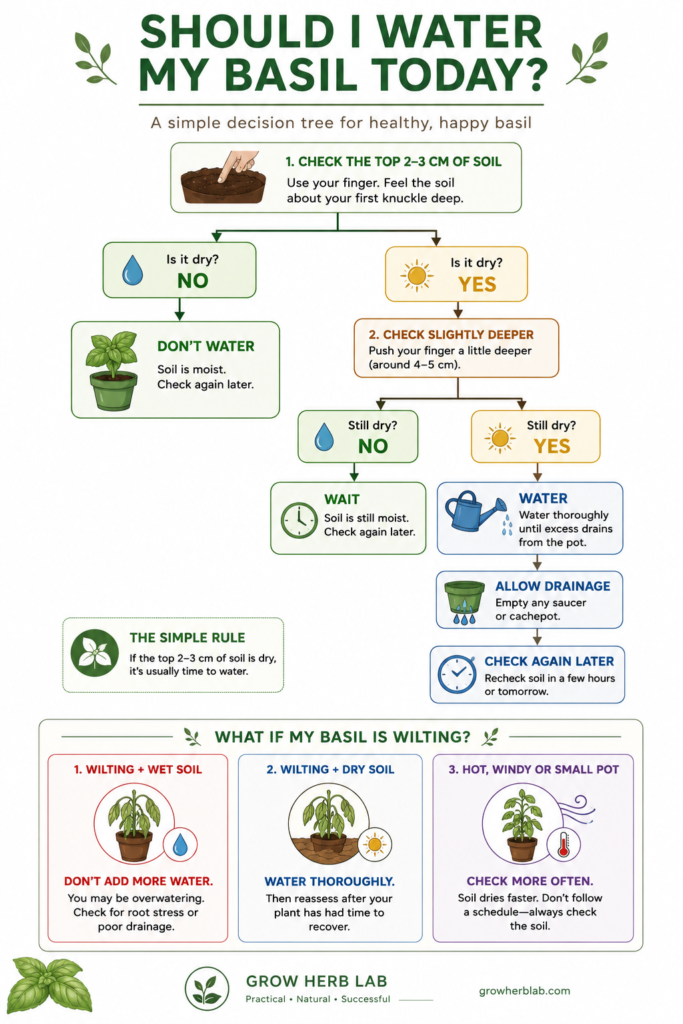
Correct Approach
- Keep soil consistently moist, not saturated
- Water deeply, then allow slight drying at the top
Simple Rule
- If top 2–3 cm is dry → water
Avoid
- Constantly wet soil → root rot
- Letting soil fully dry → plant stress
Australia tip:
In hot weather, daily watering may be required for potted plants.
Planting Methods
From Seed
- Germination: 5–10 days
- Sow shallow (lightly covered)
- Keep warm and moist
From Seedlings (Recommended)
- Faster establishment
- More reliable
- Ideal for beginners
Spacing
- 20–30 cm between plants
Container vs Ground Growing
- Better control of water and soil
- Easier pest management
- Ideal for beginners
Ground
- Higher yield potential
- Requires good soil preparation
Fertilising Strategy
Basil is a moderate feeder.
Best Approach
- Apply liquid fertiliser every 2–3 weeks
- Use balanced fertiliser or compost tea
Avoid
- Over-fertilising → excessive leaf growth, reduced flavour
Pruning & Harvesting (Yield Multiplier)
This is where most people go wrong.
When to Start
- Once plant has 4–6 sets of leaves
How to Prune
- Cut above a node (where leaves branch)
- Never remove just a single leaf
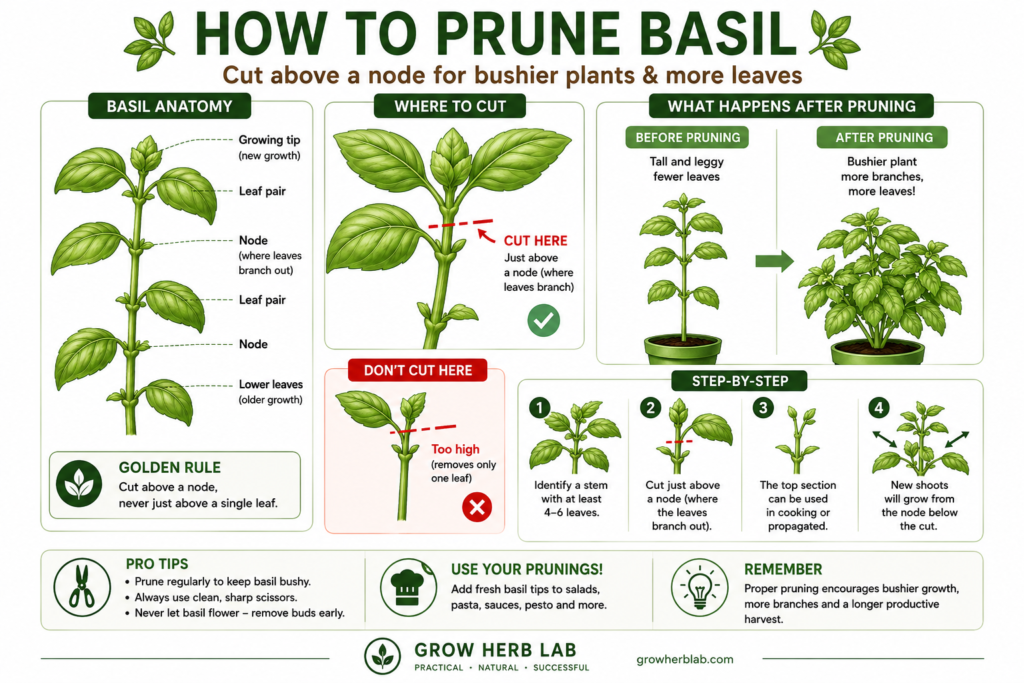
Golden Rule
Never let basil flower.
- Remove flower buds immediately
- Flowering reduces leaf production and flavour
👉 Proper pruning = 3–5x more yield
Propagation (Expand Your Supply)
From Cuttings (Highly Effective)
- Cut 10–15 cm stem
- Remove lower leaves
- Place in water
- Roots form in 5–10 days
👉 This allows unlimited basil from one plant
Pests & Diseases
Common Pests
- Aphids
- Whiteflies
- Spider mites
Solutions
- Neem oil spray
- Strong water spray
- Good airflow
Common Diseases
- Root rot → overwatering
- Powdery mildew → humidity + poor airflow
Prevention
- Well-draining soil
- Avoid wet leaves
- Space plants properly
Quick Basil Troubleshooting Guide
| What you see | Most likely cause | Check first | What to do |
|---|---|---|---|
| Yellow leaves | Often excess water or poor drainage | Is the soil staying wet? | Let the upper soil dry slightly and check drainage |
| Basil wilting + dry soil | Underwatering | Check soil 2–3 cm deep | Water thoroughly and allow excess water to drain |
| Basil wilting + wet soil | Root stress / possible overwatering | Is soil constantly wet or poorly drained? | Stop watering and investigate drainage/root health |
| Tall, leggy growth | Insufficient light or lack of pruning | Check light and spacing between leaf nodes | Increase light where appropriate and prune above a node |
| Basil flowering early | Heat, maturity or insufficient harvesting | Look for developing flower buds | Pinch flowers early and harvest/prune regularly |
| Holes or damaged leaves | Insect feeding | Inspect both sides of leaves | Identify the pest before treating |
| White powdery coating | Possible powdery mildew | Check airflow and leaf surfaces | Improve airflow, avoid persistently wet foliage and confirm diagnosis |
| Brown/black soft stem near soil | Possible root/stem rot | Check roots, drainage and soil moisture | Reduce excess moisture and assess whether the plant can recover |
Companion Planting
Good Companions
- Tomatoes
- Peppers
- Lettuce
Benefits
- May improve flavour (commonly claimed)
- Helps deter pests
Harvesting & Storage
Harvesting
- Harvest regularly
- Never take more than 30–40% at once
Storage Options
- Fresh (short-term) → water like cut flowers
- Refrigeration → wrapped in damp paper towel
- Freezing → best long-term option
- Drying → possible, but reduces flavour
Common Problems (Quick Diagnosis)
| Problem | Cause | Solution |
| Yellow leaves | Overwatering | Improve drainage |
| Leggy growth | Lack of sun / pruning | Increase sun, prune |
| Wilting | Underwatering / heat | Water consistently |
| Bitter taste | Flowering | Remove buds |
FAQs (SEO Section)
Why is my basil dying?
Usually due to overwatering or poor drainage.
Can basil grow indoors?
Yes, but requires:
- Strong light (window or grow light)
- Good airflow
How often should I water basil?
When top soil dries out (typically daily in hot weather).
How long does basil last?
- 2–4 months peak productivity
- Replace regularly for best results
Pro Tips (High-Value Insights)
- Grow multiple plants for continuous harvest
- Replant every 6–8 weeks for consistent supply
- Always prioritise pruning over letting it grow tall
Further Reading:
Watering guide