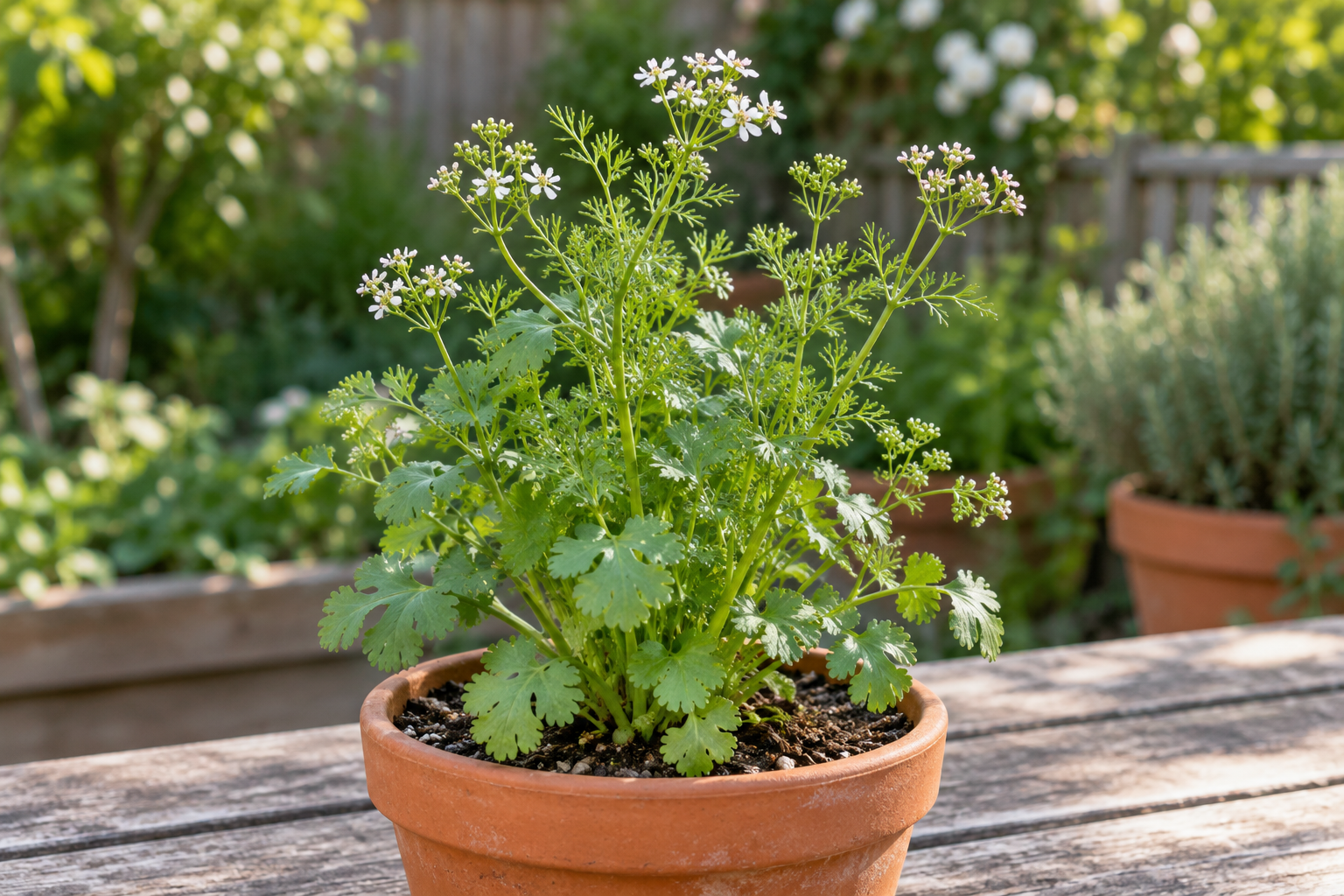
When herbs start flowering sooner than you wanted, identify the plant and decide whether you need leaves, flowers or seed. Removing young flower stems can extend leafy harvesting in some herbs, but an ageing crop may need replacing. Check growth stage and conditions before cutting, watering or feeding. A flower is not automatically a sign that you have grown the plant badly. [1, 2, 4, 5, 7]
This guide helps you recognise bolting, separate it from normal flowering and choose a realistic response. It focuses on Australian gardens and containers, with a Northern Hemisphere adaptation for seasonal decisions.
🌿 In this guide
- 🌿 Quick facts
- 🌿 Is this bolting
- 🌱 Beginner checklist
- 🌿 Why herbs flower early
- 🌿 Choose your response
- 🛠 What to do now
- 📅 Seasonal growing calendar
- 🌿 Reduce early flowering
- ⚠️ Common mistakes
- 🌿 Frequently asked questions
- 🌿 Continue learning
🌿 Grow Herb Lab quick facts
| Question | Practical answer |
|---|---|
| What is bolting? | An unwanted early move towards flowering and seed production in a crop being grown for another harvest. [1] |
| What should I look for? | Developing flower stems, buds and flowers, interpreted alongside the herb’s usual growth. Height alone is not enough. [2, 3, 4] |
| Does every herb respond alike? | No. A flowering annual leaf crop, second-season parsley and flowering rosemary call for different decisions. [2, 5, 9] |
| What is the first action? | Identify the herb, check its stage and choose the harvest you want before removing flower growth. |
| Can I keep harvesting leaves? | Sometimes. Early flower removal and suitable harvesting can help, but do not guarantee unlimited leafy growth. [2, 7, 11] |
| Can flowers be useful? | Yes. Known culinary coriander and dill offer flowers and seeds, while flowers can also feed visiting insects. [2, 7, 8] |
Recognise bolting and distinguish normal flowering
Bolting describes a crop reaching its reproductive stage earlier than is useful for the intended harvest. Annual plants normally flower within their life cycle; biennials usually flower in the following growing season. The same development can be a disappointment for a leaf grower and a useful step for someone saving seed. [1]
Look beyond one tall shoot. Find the growing tip and check for buds, flower clusters or a developing seed head. Compare the new growth with the rest of the plant and its label. A longer stem without reproductive growth needs a different investigation.
| Observation | What it may mean | First check |
|---|---|---|
| Coriander develops taller stems and finer upper leaves | It may be moving towards flowering. | Look for buds or white/pale pink flower clusters; some cultivars naturally have fine foliage. [3] |
| Basil develops terminal flower buds or spikes | Flowering growth is replacing a leafy shoot tip. | Decide whether this plant is for leaf harvest or flowers. [4, 11] |
| Dill develops umbrella-like yellow flower clusters | An annual crop is entering its flowering stage. | Choose continued leaf management or flowers/seeds. [7] |
| Parsley sends up flower stems after overwintering | Its biennial life cycle may be progressing normally. | Check planting history and arrange new plants for leaf supply. [5] |
| Rosemary has flowers among otherwise healthy shoots | Normal perennial flowering is plausible. | Follow rosemary care rather than an annual-crop rescue routine. [9] |
| Tall, thin growth without confirmed buds | Bolting has not been established. | Check light, spacing and the plant’s normal habit. |
Coriander cultivar differences can mislead beginners. For example, Confetti has finely divided foliage even before a flowering diagnosis is justified. Use the whole growth pattern and actual reproductive structures rather than leaf shape alone. [3]
For sparse, elongated growth without confirmed flowering, use Leggy herbs. If you cannot identify the plant, ask a reliable nursery or qualified local adviser before pruning or using it as food.
🌱 Beginner checklist
- Confirm which herb you have and keep its label or seed-packet details.
- Look closely for buds or flowers rather than diagnosing from height alone.
- Note the plant’s age, when it was planted and whether it has passed through a winter.
- Choose your priority: fresh leaves, flowers, seed or a replacement crop.
- Check recent conditions and feel the growing medium before adding water.
- Use the response for that herb, then watch useful growth rather than expecting every old stem to change back.
These checks organise the decisions below. A photograph of the whole plant, a close view of the growing tip and its planting history are useful starting information if you need identification help.
Why herbs flower earlier than expected
Plant age and life cycle
A crop can reach flowering because it is mature, even when care has been reasonable. Coriander and dill have limited leafy cropping periods. Parsley is a biennial, so plants kept into their next season may flower instead of continuing the leaf crop you expected. Expecting the same plants to supply leaves indefinitely can lead to repeated interventions when a new crop would be more useful. [2, 5, 7]
Species cultivar and day length
Plants differ in how seasonal signals affect flowering. Longer days and high temperatures shorten the useful leafy period of coriander, and slow-bolting cultivars still have limits. Choose seed for the harvest wanted; a leaf-oriented cultivar can help without removing the need for suitable timing. [3]
Warm or dry growing conditions
Coriander and dill can flower prematurely in hot, dry weather. Basil may also flower sooner when dry. Check whether a small pot has repeatedly dried out or plants are crowded, rather than assuming today’s weather alone explains the change. A flowering stem does not prove that the roots currently need water. [2, 4, 7, 10]
Earlier cold exposure in parsley
The relevant weather may have occurred weeks before the flower stem appeared. Texas A&M’s parsley guidance describes prolonged cold followed by warmer conditions as a bolting trigger. Plant age and exposure matter, so neither a single chilly night nor one hot afternoon explains every case. Consider cold exposure alongside age and growth rather than diagnosing from a single temperature reading. [6]
These influences can overlap. Use your observations to choose better conditions for the next crop; you may not be able to prove the precise trigger in the current plant.
🌿 Grow Herb Lab Framework: Should I trim harvest keep or replace this plant?
- Observe. Confirm the herb, reproductive growth and approximate life stage. Check moisture and recent conditions before intervening.
- Decide. Choose the useful harvest. A plant kept for seed needs its flower stems; a leafy basil crop has a different aim.
- Act. Use appropriate light harvesting or early flower removal, keep a suitable plant for flowers/seeds, or begin a replacement.
- Recheck. Look for useful new leaves, progress of the chosen seed crop or establishment of the replacement. Change the plan if it is no longer delivering the harvest wanted.
This framework combines the species-specific guidance into a practical decision sequence. It is not a promise that cutting reverses the plant’s developmental stage. Ordinary perennial flowering still belongs with that herb’s normal care. [2, 4, 5, 7, 8, 9]
🛠 What to do when herbs start bolting
Take a useful remaining harvest
If the plant is a known edible herb and the leaves are suitable, take a modest harvest while leaving enough foliage to support continued growth. Work with clean hands and tools, discard damaged material and rinse harvested herbs under running water. Washing does not replace any harvest restrictions on products previously used on the plant. [12]
Leaf texture and flavour may change as a plant flowers. Decide whether the remaining crop suits your kitchen rather than assuming every flowering plant has become poisonous or that every leaf will still taste as it did earlier. Do not taste an unidentified plant. [2, 3, 5]
Manage leafy basil
For basil grown for leaves, pinch out developing flower buds and continue taking a few shoot tips from a plant large enough to support harvesting. Removing the growing tips encourages bushier growth. Keep useful foliage instead of stripping a small or weak plant. [11]
Give it appropriate warmth, light and moisture. Flower removal cannot compensate for a poor growing position or a failing root system. You can also deliberately allow a separate basil plant to flower for visiting insects; one flower spike does not establish that every type of basil is about to die. [4]
For the full growing and harvesting method, see How to grow basil.
Plan ahead with coriander and dill
If you want leaves, remove flower stems early where the plant still has useful leafy growth. RHS guidance supports this as a way to extend harvesting in both herbs. Keep expectations limited: an advanced flower or seed crop is not a dependable substitute for a new sowing. [2, 7]
Start another small batch when local conditions suit the herb. If conditions are becoming unsuitable, choose a better growing window rather than sowing repeatedly into the same problem. You can keep selected healthy plants for their flowers or seeds while the replacement develops. [3, 8]
Replace flowering parsley for leaf supply
A parsley plant flowering in its next season is following its biennial pattern. Arrange a new planting for leaves rather than expecting repeated flower removal to make the old plant equivalent to a young one. Keep a suitable parent for seed if that is your goal and you have space. [5]
Check conditions without forcing a cure
Feel the medium below the surface and check drainage. Water when needed, allowing excess to escape. In warm or windy weather pots may need closer attention, but there is no universal daily schedule. Correct drying with suitable care; keeping roots saturated is a different problem. [10]
For a hot coriander position, light shade from harsh midday sun can help delay flowering. Match any move to the herb: basil still needs a warm, bright position. Avoid using deep shade or an extra dose of fertiliser as a general anti-bolting treatment. [2, 4]
Use the Herb watering guide for moisture checks. If the plant is collapsing, decaying or declining unexpectedly, investigate that problem or seek local advice rather than treating flowering as the whole diagnosis.
Keep useful flowers or seeds deliberately
Known culinary coriander and dill have edible flowers and useful seeds. Keeping some plants can therefore be a purposeful harvest choice, and their flowers can attract visiting insects. This does not make every herb flower edible or guarantee control of a garden pest. [2, 7, 8]
For dry seed, let suitable seed heads mature and turn brown before collecting them for further drying. Label the harvest with the plant identity and keep only sound material. Saving a packet of seed is a different goal from maintaining a continuous supply of tender leaves. [3, 7]
📅 Seasonal growing calendar
Use local conditions and the herb’s stage rather than one national sowing date. A cool period suitable for coriander is not automatically a suitable outdoor planting window for tender basil. [2, 4, 8]
| Conditions or stage | Useful decision | Limit to remember |
|---|---|---|
| A suitable cooler growing window | Plan small coriander or dill sowings for leaves. | Allow enough suitable growing time before severe heat or cold; follow local advice. [2, 7, 8] |
| Days becoming longer and conditions hotter/drier | Watch coriander for flower development and reassess the next sowing. | Slow-bolting cultivars still respond to conditions. [3] |
| A small container drying rapidly | Check the root zone and adjust care or exposure for that herb. | Do not respond to flowers alone with extra water. [10] |
| Parsley after winter and into its next growing season | Prepare replacement plants for leaves, or retain a suitable seed parent. | Flowering may reflect its life cycle and earlier cold exposure. [5, 6] |
| Warm conditions suitable for basil | Harvest shoot tips and remove young flower buds if leaves are the goal. | Basil requires warmth; a coriander cool-season strategy is not interchangeable. [4, 11] |
Australian climate differences
In cool or frost-prone districts, judge cold exposure and the remaining growing window as well as summer heat. Hot, dry gardens may need a different coriander schedule from mild coastal sites. In a Gardening Australia discussion, Jerry Coleby-Williams recommends avoiding summer coriander sowing in the subtropics and treating flowering as a prompt to arrange the next crop. That regional example is not a calendar for every Australian garden. [8]
Use Herb climate and hardiness to assess your local growing window. Record when a crop was sown and when flower buds appeared; those observations can improve your next planting decision.
Northern Hemisphere adaptation
Apply the same species and growth-stage decisions to your local seasons. Follow the end of damaging cold, the approach of summer heat and the remaining time for the crop you want. UK or US spring and summer sowing dates are regional guidance, not dates to copy into an Australian plan or shift mechanically by six months. [2, 4, 7]
Reduce unwanted early flowering in the next crop
Choose the harvest and growing window first
Choose coriander seed for leaf production if leaves are the priority. A slow-bolting cultivar may extend the opportunity, but high temperatures and long days can still shorten it. For a seed crop, flowering is part of the goal. Check the packet and local conditions before choosing a sowing window. [2, 3]
Arrange a continuing supply of young plants
Sow small batches as earlier crops develop, provided the season remains suitable. Let the rate of growth and your kitchen use guide the spacing between sowings. This reduces reliance on one ageing planting; it does not guarantee a year-round supply or require every gardener to sow on the same fortnightly timetable. [3, 8]
For establishing the next batch, use the Herb seed germination guide. Start replacements early enough to avoid waiting until the old crop has no useful leaves left.
Keep the growing setup manageable
Avoid leaving a dense nursery pot untouched until the plants are crowded and repeatedly dry. Give the herb appropriate space and check the actual medium. Where coriander is being sown afresh, direct sowing into its intended growing position can avoid transplant disturbance. Retain the moisture and drainage balance rather than trying to keep every herb permanently wet. [2, 10]
Harvest suitable plants regularly enough to use young growth, and check leafy basil for developing buds. Judge the plant’s response before taking more. A useful routine supports the harvest; it does not suspend its life cycle. [11, 12]
⚠️ Common mistakes
- Calling every flower a failure. Check the plant’s normal life cycle and whether flowers or seeds are useful to you. [5, 8, 9]
- Diagnosing bolting from height or one fine leaf. Look for reproductive growth and consider cultivar differences. [3]
- Treating every herb like basil. Flower removal may extend a harvest, but an old parsley plant and a rosemary shrub need different plans. [5, 9, 11]
- Repeatedly trimming an ageing crop without arranging a replacement. Start another suitable planting while some useful leaves remain. [2, 7, 8]
- Keeping a flowering plant wetter without checking the roots. Water according to the medium and conditions. [10]
- Expecting a slow-bolting label to defeat an unsuitable season. Use it alongside a realistic growing window. [3]
🌿 Frequently asked questions
Can I stop a herb that has already started flowering?
You can remove a flower stem, and early removal can prolong leafy harvesting in some herbs. It does not guarantee that the plant returns to an earlier growth stage or supplies the same crop indefinitely. Decide whether further leaf management or a new planting is the more useful option. [2, 7, 11]
Should I remove coriander flowers or sow again?
For leaves, early flower removal is an option while the plant still has useful growth. Arrange another sowing when conditions suit rather than relying only on cutting. If you want flowers or seeds, retain suitable plants and manage the next leaf crop separately. [2, 8]
Why is my parsley flowering even though the weather is cool?
Check its age and previous winter exposure. Parsley normally flowers in its following season, and prolonged cold can contribute to flowering as temperatures later rise. The weather on the day you notice the stalk may not explain when the process began. [5, 6]
Will basil die as soon as it flowers?
A flower does not establish immediate death. Basil types and growing conditions differ. If leaves are your priority, remove developing buds and maintain suitable care; if growth remains poor, assess the whole plant instead of judging its future from one spike. [4, 11]
Can I use flowering herbs or keep them for seed?
Known culinary coriander and dill offer edible flowers and seeds, but this is not permission to eat flowers from any plant called a herb. Confirm identity and respect any product harvest restrictions. Keep a plant for seed deliberately rather than expecting it to remain at peak leaf quality at the same time. [2, 7, 12]
Does a slow-bolting variety prevent flowering?
It can delay flowering compared with other cultivars under suitable conditions. It cannot promise permanent leafy growth through an unsuitable season. Match the cultivar to the crop you want and continue planning replacements. [3]
🌿 Key takeaways
- Confirm the herb, reproductive growth and life stage before choosing a response.
- Decide whether leaves, flowers or seeds are the useful harvest.
- Use early flower removal and harvesting where appropriate, with realistic limits.
- Plan replacement sowings around local conditions rather than trying to prevent all flowering.
🌿 What success looks like
For a leaf crop, success means useful growth and a replacement plan before supply runs out. For a seed or flower crop, it means retaining suitable healthy plants for that purpose. New leafy basil shoots, a young replacement parsley plant or a deliberate coriander seed harvest can all be reasonable outcomes. The aim is a useful crop, not a plant that never flowers. [2, 5, 7, 11]
🌿 Continue learning
🌿 Related growing guides
Basil — Grow and harvest a useful leafy plant.
Rosemary — Care for a flowering perennial herb.
📚 Reference guidance
Herb climate and hardiness — Choose a growing window for your garden.
Herb watering guide — Decide when the roots need water.
Herb seed germination — Start the next crop in suitable germination conditions.
🛠 Problem solving
Leggy herbs — Investigate tall sparse growth.
📥 Free resources
Free herb growing kit — Practical checklists for starting and caring for herbs.
🌿 Final thoughts
Start with the plant in front of you and the harvest you want next. A timely trim, a deliberate seed crop or a new sowing can each be the sensible decision. Choose the response that supports your garden rather than treating every flower as something to eliminate.
Sources
1 Royal Horticultural Society — Bolting in vegetables
2 Royal Horticultural Society — How to grow coriander
3 University of Wisconsin Extension — Cilantro / Coriander Coriandrum sativum
4 Royal Horticultural Society — How to grow basil
5 Royal Horticultural Society — How to grow parsley
6 Texas A&M AgriLife Extension — Parsley commercial and specialty crop guide
7 Royal Horticultural Society — How to grow dill
8 ABC Gardening Australia — FAQs Seed germination Bolting coriander Why do flowers smell
9 Royal Horticultural Society — How to grow rosemary
10 Royal Horticultural Society — How to water containers
11 University of Illinois Extension — Basil
12 University of Maryland Extension — Harvesting and preserving herbs