Annual herbs complete their life cycle in one growing season, biennials usually grow through two, and perennials can live across several years. These labels describe a growth pattern, not a guaranteed period of harvesting. Identify your herb, consider its current stage and local conditions, then decide whether to keep it, renew healthy stock or start another crop. [1]
A finished coriander crop is different from mint resting through an unsuitable season or an old rosemary that is awkward to harvest. This reference helps you make that distinction in Australian gardens and pots. Northern Hemisphere readers can adapt the seasonal planning section to their local conditions.
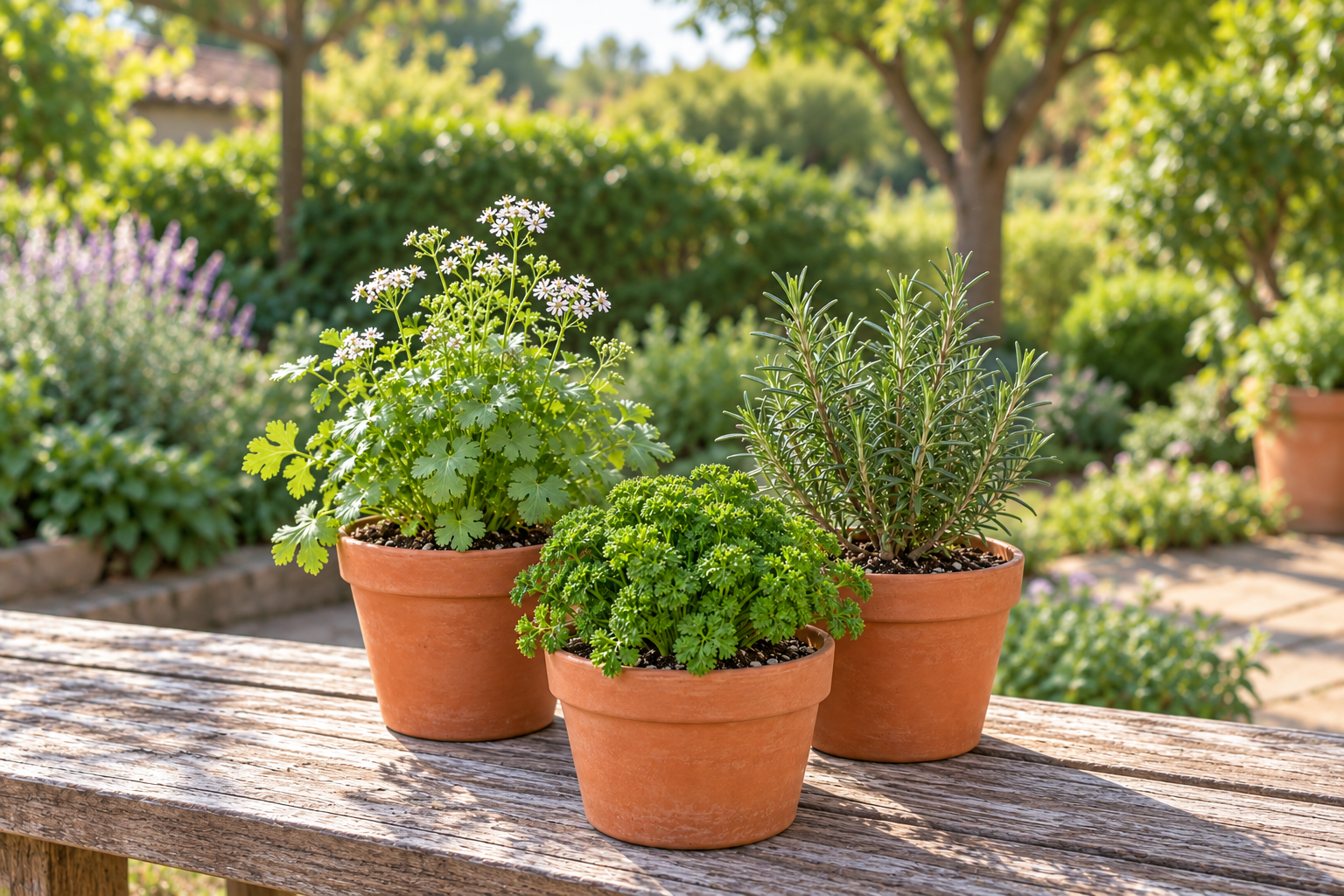
🌿 In this guide
- 🌿 Quick facts
- 🌿 Understand life-cycle labels
- 🌿 Compare familiar herbs
- 🌱 Beginner checklist
- 🌿 Keep renew or replace
- 🌿 Adapt to your conditions
- 🌿 Plan the next harvest
- 📅 Seasonal growing calendar
- ⚠️ Common mistakes
- 🌿 Frequently asked questions
- 🌿 Continue learning
🌿 Grow Herb Lab quick facts
| Question | Practical answer |
|---|---|
| Does annual mean twelve months of picking? | No. The growing season and the useful leaf-harvest period can be much shorter. [2] |
| Does biennial mean exactly two calendar years? | No. It describes the usual sequence over two growing seasons, rather than a promise measured from purchase day. [1] |
| Does perennial mean evergreen? | No. Some retain woody growth; others may lose their top growth and return from surviving parts. [2] |
| Will a perennial keep yielding indefinitely? | No fixed lifespan or harvest is guaranteed. Suitable conditions and practical renewal still matter. [8, 9] |
| What should I record? | Herb identity, planting or sowing date, current growth, flowering and the harvest you want. |
| What is the first decision? | Work out whether the change fits the identified plant’s stage and season before treating it as a failure. |
Understand annual biennial and perennial labels
Annual herbs complete one growing cycle
An annual grows from seed, matures, flowers and produces another generation within a growing season, then dies. A growing season is a period of suitable growth, not necessarily January to December. Starting late in that period does not give a plant a fresh twelve-month entitlement. [2]
For a leaf grower, the most useful part of that cycle may end before seed ripens. For a seed grower, flowering is progress. Use your intended harvest to judge the crop, rather than assuming every flowering annual has become useless.
Biennial herbs usually grow through two seasons
A typical biennial builds leaves and roots first, then flowers and sets seed in its following growing season before dying. Timing varies with the plant and its conditions. A label describes the usual cycle; it cannot tell you how old an unlabelled nursery plant was when you bought it. [1, 4]
Perennial herbs can continue across years
Perennials have a longer potential life, but their appearance differs. Rosemary retains a woody framework. Mint and French tarragon can lose above-ground growth in colder conditions while living parts remain below. Flowering, leaf loss and whole-plant death are separate events. [8, 12]
Evergreen means the plant normally retains foliage; it does not promise continuous active growth or a constant harvest. Likewise, short-lived perennial is a useful warning to plan renewal, not an exact expiry date. A living plant and a convenient source of tender kitchen leaves are not always the same thing.
Returning seedlings are a new generation
Coriander sometimes sows itself. New seedlings emerging near last season’s plant are offspring, not evidence that the original annual survived. With mint, shoots arising from established rhizomes can be regrowth of the continuing plant. Knowing which happened helps you plan space and future sowings. [7, 10]
Compare familiar herbs
Use the botanical name where you have it. Common names can cover different species and cultivated types. The table gives a planning interpretation, not a national calendar or a number of years every plant must reach. Basil especially needs more detail than a single universal label.
| Herb and identity | Life-cycle interpretation | Useful planning response |
|---|---|---|
| Coriander Coriandrum sativum | Annual; the leafy crop gives way to flowering and seed. [5] | Sow replacement batches for leaves, or deliberately keep a suitable plant for flowers or seed. |
| Dill Anethum graveolens | Annual; leaves, flowers and seed are different harvest stages. [6] | Arrange another sowing when continued fresh leaves are the goal. |
| Basil Check Ocimum type | Sweet basil, O. basilicum, is described as annual or short-lived perennial. [11] | Treat familiar leafy crops as seasonal where appropriate; check the particular type before expecting repeat-year survival. |
| Parsley Petroselinum crispum | Biennial, often grown as an annual leaf crop. [4] | Start replacement plants when leaf supply is declining; keep a flowering plant only for a deliberate purpose. |
| Mint Mentha species and cultivars | Herbaceous perennial; seasonal regrowth and container crowding can change its appearance. [7] | Retain viable stock and renew an established crowded clump when appropriate. |
| Rosemary Salvia rosmarinus | Evergreen woody perennial; useful shape can decline before the plant dies. [8] | Keep a productive plant; plan replacement from suitable young stock when renewal is worthwhile. |
| French tarragon French culinary type of Artemisia dracunculus | Relatively short-lived perennial; identity matters when propagating. [9] | Renew healthy stock by suitable division or cuttings; use its dedicated guide for details. |
Why basil labels can seem contradictory
Royal Botanic Gardens Victoria describes common basil as annual or short-lived perennial. RHS growing advice also recognises perennial basil types commonly cultivated as annuals where warmth and light become limiting. Both the plant’s identity and the way it is grown matter; the word basil alone is insufficient. [3, 11]
For the growing decisions behind a productive leaf crop, use the Basil growing guide. Keep its label when buying an unfamiliar type so you can check advice for that plant rather than borrowing another basil’s expected behaviour.
Why parsley can be replaced before its cycle finishes
Parsley’s biennial description does not require you to keep one plant until seed is ripe. Many growers replace it earlier for useful leaves. Removing a flower stalk does not turn a biennial into an indefinitely recurring crop. Decide whether this plant is serving the kitchen or being kept for flowering and seed. [4]
🌱 Beginner checklist
- Identify the herb and type. Keep the botanical name, label or seed packet with your growing notes.
- Record the starting point. Use the sowing or planting date if known; mark purchase dates as purchase dates.
- Describe the change. Note fresh shoots, flowers, bare stems, leaf loss and whether the change is sudden or gradual.
- Check the local phase. Consider recent cold, heat and rainfall alongside that herb’s normal growth.
- Choose the harvest. Fresh leaves, flowers and ripe seed may call for different plans.
- Arrange the next step. Keep productive growth, monitor expected rest, renew suitable healthy stock or establish a replacement.
- Set a review point. Look again as the relevant growth phase arrives, and investigate sooner if the condition is worsening.
A quick photograph and a few notes make later comparisons more useful. For example, “new shoots appearing at the base” is more informative than “looks old”. You do not need to prove the exact age of a plant before making a sensible harvest plan.
🌿 Grow Herb Lab Framework: Keep, renew or replace?
Use this sequence to organise the evidence. It is a planning framework, not a test that can prove a bare or declining plant is alive.
- Observe. Identify the herb, its current growth and the conditions it has experienced. Separate a new seedling from regrowth of an established plant.
- Decide. Ask whether the observed stage fits the plant and whether it still supplies the harvest you want. If identity or health is uncertain, resolve that uncertainty first.
- Act. Keep healthy useful growth; monitor plausible seasonal rest; sow a replacement crop; or renew an appropriate healthy perennial through its suitable propagation method.
- Review. Look for the result of that choice: useful new growth, a replacement establishing or a deliberate flower/seed crop progressing. Reconsider a plan that is no longer working.
For example, you might retain a useful rosemary while establishing its eventual replacement, or sow fresh coriander while an existing crop finishes. The next plant does not have to wait until the previous one has completely disappeared.
If an apparent life-cycle explanation does not fit the observed decline, move to Why herbs keep dying. Avoid classifying unexplained damage as old age simply because a plant has been in its pot for a while.
Adapt to climate containers and indoor growing
Use the conditions in your garden
Perennial potential and local survival are different questions. Cold, wet conditions can threaten French tarragon even though it is perennial. Warmth-dependent basil may need a suitable protected position where winter is limiting. The life-cycle label should start your planning, not overrule the conditions the plant actually experiences. [3, 9]
For Australian climate, exposure and hardiness decisions, use Herb climate and hardiness. Compare your site and local season with the plant’s requirements before deciding that a different location or another growing window would help.
A container needs its own assessment
A pot provides useful flexibility, but the plant still needs suitable root space and conditions. Established mint can require division and repotting; a cramped clump is not automatically at the end of its biological life. Use the condition of the planting to decide when renewal is worthwhile. [7]
Moving a pot indoors is a change of environment, not a guarantee of survival. A protected herb still needs an appropriate bright position, and winter containers need protection from damaging extremes of wetness, dryness or cold. Assess the actual place available rather than assuming any room will preserve an outdoor crop. [12]
Keep care changes specific. Do not add water or fertiliser simply because a plant is older. First decide what problem you are trying to solve and whether the plant is actively growing, completing a crop or experiencing an unsuitable environment.
Plan replacement and renewal
Start another annual or biennial crop
Coriander grown for leaves is a short-term crop; successive small sowings can spread the supply. The practical interval depends on growth and your needs. A late or poorly timed sowing may not bridge the gap you expected, so observe progress before relying on it as the only replacement. [5]
Dill also offers a limited leafy cropping period before flowering. Several small sowings can be more useful for repeated leaf harvests than expecting one plant to remain vegetative indefinitely. A plant kept for seed can coexist with a younger leaf crop. [6]
For starting the next batch, use Herb seed germination. Record what you sow and check that the young plants are establishing before depending on them for the next harvest.
Renew appropriate healthy perennial stock
Renewal methods differ. Suitable herbs can be propagated by seed, division or cuttings, but these methods are not interchangeable. Match the method to the plant and its active growth. Use a named herb’s guide for the details instead of dividing every perennial or cutting every stem back alike. [10]
French tarragon is a useful example: division or cuttings can maintain productive young stock, while seed sold as tarragon may be a different type. Renewal should preserve the herb you intended to grow, rather than silently replacing it with another culinary plant. [9]
Use the French tarragon growing guide for identity, seasonal care and suitable renewal methods.
Keep useful established growth
Replacement need not follow a birthday. Rosemary may become bare or awkward to harvest; that can justify establishing a younger plant even while the original remains alive. General replacement intervals are cultivation suggestions, not proof that every rosemary dies at that age. [8]
For pruning and care decisions, follow the Rosemary growing guide. With any propagation plan, select suitable healthy material rather than carrying unexplained decline into the next planting.
📅 Seasonal growing calendar
Use this condition-and-stage calendar in your own growing window. Australia has contrasting climates, so the same calendar month can call for different decisions. These are planning questions; they do not replace the needs of the particular herb.
| Observed local phase | Life-cycle question | Practical planning response |
|---|---|---|
| Suitable conditions and active growth | Is this a productive crop or a useful time to establish its successor? | Keep harvesting appropriately and arrange sowings or suitable propagation while conditions support establishment. [10] |
| A leafy annual begins flowering | Do I want more leaves from another crop, or flowers and seed from this one? | For coriander or dill, plan the next leaf crop while deciding whether to retain the existing flowering plant. [5, 6] |
| Conditions are becoming unsuitable | Can this herb continue in the position it has? | Review protection or a different growing window. Do not assume a perennial label guarantees survival. [3] |
| An identified herbaceous perennial loses top growth in its usual resting phase | Is this expected seasonal behaviour, and is there evidence of worsening trouble? | Keep the plant identified and assess its conditions. Avoid throwing it away solely because the top is bare, or assuming that every bare plant is dormant. [12] |
| The expected growth period returns | Are shoots appearing, and is the planting still useful? | Compare with previous growth and local conditions. Follow species-specific renewal or diagnosis if the expected response does not occur. |
Australian growing notes
In frost-prone districts, plan ahead for herbs that need warmth. In a warm winter garden, do not expect every herb to disappear simply because a cool-climate guide says winter dieback. In hot or dry periods, a coriander leaf crop may be shorter than you hoped. Match the example to the herb and observed conditions. [5, 7]
Northern Hemisphere adaptation
Use the same sequence in your local seasons: suitable establishment, productive growth, approaching unsuitable weather, rest where expected and return to growth. Check local frost, heat and rainfall rather than shifting Australian instructions by six months. Southern- and Northern-Hemisphere gardens both vary within their regions.
⚠️ Common mistakes
- Treating a label as a countdown. Use annual, biennial or perennial to understand the pattern, then assess the actual crop.
- Calling returning seedlings the same plant. Keep sowing and regrowth notes so a successful new generation does not create a false lifespan expectation.
- Assuming every flower means failure. Choose the harvest wanted before deciding what flowering means for this plant.
- Treating all bare growth as dormancy. Check identity, season and the wider condition; investigate when that explanation does not fit.
- Trying to reset age with extra care. Decide whether a specific growing problem exists before adding more water or feed.
- Renewing everything on one timetable. A useful established shrub, a crowded clump and a finishing annual crop need different plans.
The better habit is to write down the observation first and the proposed action second. This makes it easier to notice when the diagnosis is an assumption.
🌿 Frequently asked questions
Does annual mean my herb will last a full year?
No. An annual completes its cycle within one growing season, and that period may be shorter than a year. Its best harvesting stage is shorter again. Use the label to plan another crop rather than count twelve months from the purchase date. [2]
Is basil annual or perennial?
It depends on the type and how it is grown. Common sweet basil is described botanically as annual or short-lived perennial; many familiar leaf crops are treated as seasonal. Keeping a plant warm does not establish that every basil will remain productive for years. [11]
Will parsley return indefinitely if I remove flowers?
No. Parsley is biennial and is often replaced earlier for leaves. Removing flowering growth does not make it a permanent leaf crop. Arrange a replacement if reliable fresh leaves are your priority. [4]
Has my mint died or is it resting?
Seasonal dieback is possible, but a bare top cannot settle the question. Check the identified mint, its history and conditions, then look for expected new growth. Seek local advice if you cannot distinguish rest from deterioration. [7]
Do self-sown seedlings mean the original herb came back?
No. They are new plants from seed. Some coriander can self-sow, which is useful, but its offspring do not change the original plant’s annual life cycle. [10]
When should I replace or renew a perennial herb?
Use the identified herb’s condition and purpose. A healthy plant supplying useful growth may be kept; another may benefit from an appropriate renewal method. There is no one replacement age for the whole herb garden. Plan the next supply before removing useful stock where practical.
🌿 Key takeaways
- Separate life-cycle category, local survival and useful harvest period.
- Identify the herb and assess current growth before deciding it has reached its end.
- Distinguish new seedlings from established perennial regrowth.
- Keep useful plants, arrange new crops and renew suitable healthy stock deliberately.
🌿 What success looks like
You can name the herb, explain the stage it has reached and choose a sensible next action. Productive growth continues where realistic, a monitored resting plant remains identified, or a replacement is establishing. A deliberate flower or seed crop can be a successful result too; keeping the same plant forever is not the test.
🌿 Continue learning
🌿 Related growing guides
- Basil — basil type, growing conditions and harvesting.
- Mint — seasonal growth and container renewal.
- Rosemary — established woody growth and appropriate pruning.
- French tarragon — perennial renewal and species-specific growing advice.
📚 Reference guidance
- Herb climate and hardiness — assess survival conditions and local growing windows.
- Herb seed germination — establish planned replacement sowings.
🛠 Problem solving
- Bolting herbs — respond to unwanted early flowering.
- Why herbs keep dying — investigate decline that life cycle alone cannot explain.
📥 Free resources
- Free herb growing kit — practical checklists to help plan and care for your herb garden.
🌿 Final thoughts
A herb garden can contain continuing plants and successive crops at the same time. Understanding which you have makes replacement and renewal a planned part of growing, with a clearer path to the next useful harvest.
Sources
1 Royal Horticultural Society — How plants age
2 ABC Gardening Australia — Annuals Biennials and Perennials
3 Royal Horticultural Society — How to grow basil
4 Royal Horticultural Society — How to grow parsley
5 Royal Horticultural Society — How to grow coriander
6 Royal Horticultural Society — How to grow dill
7 Royal Horticultural Society — How to grow mint
8 Royal Horticultural Society — How to grow rosemary
9 Royal Horticultural Society — How to grow tarragon
10 Royal Horticultural Society — Herbs propagating
11 Royal Botanic Gardens Victoria — HortFlora Ocimum basilicum
12 Royal Horticultural Society — Herbs in containers