Why Your Herbs Keep Dying: Start With Diagnosis
If your herbs keep dying, the cause is usually not bad luck or a lack of gardening ability. Most herb decline can be traced to a small number of problems involving water, drainage, light, temperature, roots or unsuitable care.
The difficult part is that several problems can produce similar symptoms. Yellow leaves may indicate excess moisture, poor drainage, root damage, nutrient problems or natural ageing. Wilting can mean dry soil, waterlogged roots, heat stress or transplant shock.
The solution is to diagnose the growing conditions before treating the symptom.
This guide will help you identify what is happening, correct the immediate problem and prevent it from returning.
Quick Diagnosis: Check These Five Things First
Before watering, feeding, repotting or pruning a struggling herb, check:
- Soil moisture: Is the root zone dry, slightly moist or saturated?
- Drainage: Can excess water leave the pot or garden bed freely?
- Light: Is the plant receiving enough usable light for its species?
- Roots: Are they firm and pale, or dark, soft, crowded or damaged?
- Recent changes: Has the herb been moved, repotted, transplanted, heavily pruned, exposed to extreme weather or recently purchased?
These observations are more useful than following a fixed watering schedule or treating every herb in the same way.
Is the Herb Dead or Still Recoverable?
A herb that looks severely stressed may still recover. Check the stems, crown and roots before discarding it.
| What You Observe | What It May Mean | Recovery Outlook |
|---|---|---|
| Flexible stems with some green tissue | The plant is stressed but alive | Often recoverable |
| Dry leaves but firm stems | Drought, heat or temporary root stress | May recover if roots remain healthy |
| Yellow leaves and constantly wet soil | Excess moisture or poor root aeration | Recoverable if root damage is limited |
| Black, soft stems at soil level | Advanced crown or root rot | Poor unless healthy material can be propagated |
| Entire plant brown, brittle and dry | Severe dehydration, frost damage or death | Low if no living tissue remains |
On a firm, mature stem, lightly scratch one small area of the outer surface. Green or moist tissue beneath it indicates that section is still alive. Do not use this test on soft young stems, and avoid checking multiple areas unnecessarily.
The Grow Herb Lab Diagnostic Framework
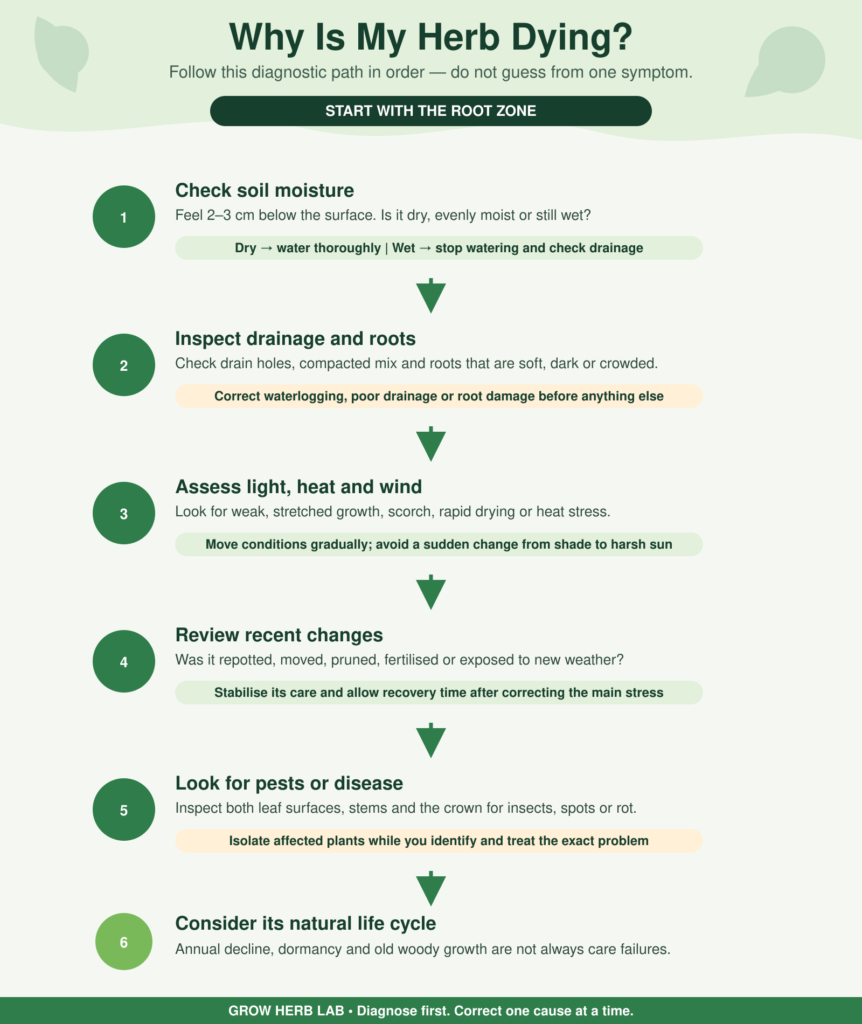
Use this order whenever a herb begins to decline:
- Observe: Identify the affected leaves, stems, soil and roots.
- Check: Test moisture, drainage, light and recent environmental changes.
- Correct: Change the most likely cause without applying several treatments at once.
- Monitor: Watch new growth rather than expecting damaged leaves to become healthy again.
- Prevent: Adjust the growing setup so the same problem is less likely to return.
Changing everything at once makes diagnosis harder and can place an already stressed plant under additional pressure.
12 Common Reasons Herbs Die
1. Overwatering and Waterlogged Roots
Overwatering is not simply giving a plant a large amount of water. It occurs when the root zone remains wet for too long and air cannot move through the growing medium.
Roots need both moisture and oxygen. When air spaces remain saturated, roots struggle to function and may begin to decline. Damaged roots absorb water poorly, so an overwatered herb can wilt even while its soil is wet.
Common signs:
- Yellowing lower leaves
- Soft or collapsing stems
- Wilting while the soil remains wet
- A pot that stays heavy for many days
- Dark, soft or unpleasant-smelling roots
What to do: Stop unnecessary watering, empty saucers and decorative outer pots, and allow the root zone to begin drying. If decline continues or the plant smells rotten, inspect the roots and remove badly decayed material before repotting into fresh, free-draining mix.
Prevention: Check moisture at root depth and water according to the plant, container, weather and growing medium rather than the calendar.
2. Underwatering or an Unevenly Dry Root Ball
Herbs lose water through their leaves. If roots cannot replace that moisture quickly enough, stems and leaves lose firmness and the plant wilts.
Small pots, newly purchased herbs and root-bound plants may dry rapidly. A newly transplanted root ball can also become dry while the surrounding soil still feels moist.
Common signs:
- Dry or pulling-away potting mix
- A container that feels unusually light
- Thin, crisp or curling leaf edges
- Wilting that improves after thorough watering
- Repeated wilting during warm or windy weather
What to do: Water the root zone slowly and thoroughly. If water runs down the side of a dry pot without wetting the centre, apply it in stages or briefly soak the pot, then allow it to drain completely.
Prevention: Check small containers more frequently during warm weather, but continue testing the soil rather than automatically watering every day.
3. Poor Drainage
A herb can receive an appropriate amount of water and still fail if that water cannot drain away. Blocked drainage holes, compacted potting mix, heavy garden soil and water trapped inside decorative pots can all keep roots saturated.
Common signs:
- Water sitting on the soil surface
- Soil remaining wet long after watering or rain
- Slow growth and recurring yellow leaves
- Algae, mould or fungus gnats around constantly damp mix
- Repeated root problems despite reduced watering
What to do: Clear drainage holes, remove trapped water and replace collapsed or unsuitable potting mix. In poorly drained garden soil, improve the soil structure gradually with organic matter or grow drainage-sensitive herbs in raised beds or containers.
Do not try to correct heavy clay by mixing in a small amount of sand. An unsuitable ratio can create an even denser soil structure.
4. Too Little Light
Light provides the energy plants use to grow. A herb kept in insufficient light may remain alive for a time but gradually becomes weak, sparse and vulnerable to other problems.
Common signs:
- Long gaps between leaves
- Growth leaning towards a window
- Pale, thin or unusually large leaves
- Weak stems and limited branching
- Potting mix staying wet longer because growth is slow
What to do: Move the herb gradually to a brighter position suited to its species. Indoors, place it near the brightest appropriate window or use a suitable grow light when natural light is inadequate.
Prevention: Match the herb to the available light. Mediterranean herbs generally need stronger light than herbs such as mint, parsley and chives, although all require enough light to maintain healthy growth.
5. Excessive Sun, Heat or Wind
Many herbs prefer bright conditions, but intense heat and drying wind can cause water loss faster than the roots can replace it. Newly planted herbs, indoor-grown plants moved outside and herbs in small containers are particularly vulnerable.
Heat stress is not always caused by sunlight alone. A dark container, reflective wall, paved balcony or hot window can raise the temperature around leaves and roots considerably.
Common signs:
- Wilting during the hottest part of the day
- Bleached, brown or crisp patches on exposed leaves
- Rapidly drying containers
- Scorched growth after a sudden move into stronger light
- Flowers or tender shoots collapsing during extreme weather
What to do: Check the soil before watering. If it is dry, water thoroughly and allow the excess to drain. Provide temporary afternoon shade or shelter from hot wind where necessary. Move recently relocated plants into stronger light gradually rather than in one step.
Prevention: Acclimatise herbs over several days, protect vulnerable plants during heatwaves and avoid placing small pots where surrounding surfaces intensify heat.
6. Unsuitable or Degraded Soil
Healthy herb roots need a growing medium that holds enough moisture for the plant while still allowing excess water to drain and air to circulate.
Garden soil placed in a pot can compact severely. Old potting mix may collapse, become difficult to rewet or lose the structure that originally allowed good drainage. Very rich or moisture-retentive soil can also be unsuitable for Mediterranean herbs such as rosemary, thyme, sage and oregano.
Common signs:
- Water pooling on top or running immediately down the sides
- Compacted, shrunken or sour-smelling mix
- Persistent moisture around drainage-sensitive herbs
- Weak growth despite otherwise suitable care
- Repeated nutrient or root problems
What to do: Replace exhausted or structurally poor potting mix with a fresh product suited to container growing. Match the mix to the herb: moisture-demanding herbs need more water retention than dry-climate herbs, but neither group benefits from stagnant, airless soil.
Prevention: Use potting mix in containers rather than garden soil, refresh tired mix when its structure fails, and avoid compressing it firmly around roots.
7. The Wrong Container or Root-Bound Growth
Container size changes how quickly the root zone dries. A very small pot may dry within hours during hot weather, while an oversized pot can hold unused moisture around a small root system for too long.
Herbs sold in crowded nursery pots may also contain several plants competing for limited water, nutrients and root space.
Common signs:
- Roots circling densely around the pot
- Roots emerging through drainage holes
- Water running through immediately without wetting the root ball
- Repeated wilting soon after watering
- Slow growth despite suitable light and care
What to do: Repot into a container only moderately larger than the existing root ball. Loosen tightly circling roots gently where practical and use fresh potting mix. Divide crowded herbs only when the species and plant condition make division appropriate.
Prevention: Choose containers according to the plant’s current root system and expected mature size. Always ensure that excess water can drain freely.
8. Too Much or Too Little Fertiliser
Fertiliser cannot correct poor light, damaged roots, unsuitable soil or incorrect watering. Feeding a stressed herb may worsen the problem because damaged roots can be sensitive to concentrated salts.
Excess fertiliser can burn roots, produce weak growth and reduce flavour in some culinary herbs. A genuine nutrient shortage is possible, particularly in long-term containers, but it should be considered alongside soil condition, root health and watering.
Possible signs of excessive feeding:
- Brown leaf tips or margins after fertilising
- White salt deposits on the mix or pot
- Very soft, rapid growth
- Wilting despite moist soil after a strong application
White deposits alone do not prove overfeeding because minerals from hard water can create a similar crust. Consider the feeding history and other symptoms before diagnosing fertiliser damage.
Possible signs of insufficient nutrition:
- Persistently weak or slow growth during the active season
- Pale older leaves when roots, moisture and light are otherwise suitable
- Declining performance in an established container with exhausted mix
What to do: If overfeeding is likely, stop fertilising and flush the container thoroughly with clean water, allowing it to drain. If the plant is healthy but genuinely underfed, apply an appropriate fertiliser at the labelled rate—often at a reduced strength for container herbs.
Prevention: Feed according to the herb, season, growing medium and container conditions. Do not fertilise simply because a plant looks unwell.
Do Not Treat Every Herb the Same
One of the most common causes of repeated failure is applying the same care routine to herbs with different natural growth habits.
| Herb Group | Examples | Typical Preference | Common Risk |
|---|---|---|---|
| Mediterranean herbs | Rosemary, thyme, sage, oregano | Strong light, excellent drainage and drying between waterings | Constantly wet soil and excessive feeding |
| Leafy annual or biennial herbs | Basil, coriander, parsley | More consistent moisture during active growth | Severe drying, heat stress or premature flowering |
| Moisture-tolerant spreading herbs | Mint, lemon balm | Regular moisture with adequate drainage | Drying in small pots or uncontrolled spreading in garden beds |
| Indoor herbs | Varies by species | Enough light, airflow and careful moisture management | Low light combined with persistently wet mix |
These are broad care patterns, not fixed watering schedules. Always adjust for the individual plant, weather, container, soil and local growing conditions.
9. Incorrect Pruning or Unmanaged Flowering
Regular harvesting and light pruning can keep many herbs compact and productive. However, removing too much growth at once, cutting woody herbs into bare old stems or repeatedly removing all new growth can weaken the plant.
Flowering is natural and does not automatically mean a herb is dying. In annual herbs such as basil and coriander, flowering signals a shift from leaf production towards seed production. Some plants then decline as their natural life cycle finishes.
Common signs:
- Long, sparse stems with limited branching
- Reduced leaf production after flowering begins
- Bare woody stems after severe pruning
- Weak regrowth after too much foliage was removed
What to do: Remove damaged or dead material, then allow the plant to rebuild healthy growth. Pinch or harvest leafy herbs regularly where appropriate. Prune woody Mediterranean herbs lightly within green growth and avoid cutting hard into old bare wood unless the species is known to reshoot reliably.
Prevention: Learn whether the herb is annual, biennial, herbaceous perennial or woody perennial. Its growth type determines how it should be harvested and pruned.
10. Transplant Shock or Sudden Environmental Change
Repotting, transplanting or moving a herb changes the balance between its roots and leaves. Root disturbance can temporarily reduce water uptake, while a sudden change in light, temperature, humidity or wind increases stress.
Newly purchased herbs may also have been grown under protected nursery conditions and can react poorly when placed immediately into intense sun or drying wind.
Common signs:
- Wilting soon after planting or repotting
- Temporary leaf drop
- Scorched leaves after moving into stronger sunlight
- Stalled growth while roots re-establish
- A dry original root ball surrounded by moist new soil
What to do: Check the original root ball as well as the surrounding soil. Water only when needed, protect the herb temporarily from severe weather and avoid fertilising a badly stressed plant. Keep the soil appropriately moist during establishment without leaving it saturated.
Prevention: Harden plants off gradually, minimise unnecessary root damage and avoid combining repotting with several other major changes.
11. Pests, Disease or Poor Airflow
Not every decline is caused by watering. Aphids, mites, whiteflies, caterpillars, scale and other pests can damage leaves and stems. Fungal and bacterial diseases may spread more readily where foliage remains wet, plants are crowded or air movement is limited.
Common signs:
- Sticky residue or clusters of insects
- Fine webbing, stippling or distorted new growth
- Chewed leaves or visible droppings
- Spots, lesions or powdery growth spreading across foliage
- Decline affecting neighbouring plants
What to do: Isolate affected container plants where practical. Inspect both sides of leaves, stems and the soil surface. Remove severely affected material and identify the likely pest or disease before choosing a treatment. Improve spacing and airflow, and avoid keeping foliage unnecessarily wet.
Prevention: Check herbs regularly, quarantine new plants briefly when practical, clean cutting tools and provide enough space for air to move around foliage.
12. Natural Life Cycle, Seasonal Dormancy or Age
Some herbs decline because they have completed their natural life cycle rather than because their care has failed.
Basil and coriander are commonly grown as annuals. Parsley is usually biennial and often flowers during its second year. Perennial herbs may slow down, lose foliage or become dormant during cold or otherwise unfavourable conditions. Older woody herbs can become sparse and less productive over time.
Common signs:
- Flowering followed by seed production and gradual decline
- Seasonal leaf loss without soft or rotting tissue
- Reduced productivity in an old woody plant
- Healthy new growth returning when favourable conditions resume
What to do: Confirm the herb’s normal life cycle. Collect seed, take cuttings or replace annual plants when appropriate. Protect dormant perennials from excess winter moisture and wait for the correct growing season before assuming they are dead.
Prevention: Plan for replacement, propagation or seasonal dormancy instead of expecting every herb to grow continuously for years.
Herb Symptoms and Their Most Likely Causes
| Symptom | Check First | Other Possibilities |
|---|---|---|
| Yellow lower leaves | Root-zone moisture and drainage | Natural ageing, low light or nutrient imbalance |
| Wilting with dry soil | Depth and evenness of moisture | Root-bound growth, heat or wind |
| Wilting with wet soil | Root health and drainage | Transplant shock, heat stress or disease |
| Brown crisp edges | Dryness, heat and wind exposure | Excess fertiliser or salt accumulation |
| Soft dark stems | Crown and root rot | Cold damage or severe disease |
| Long weak growth | Available light | Overfeeding or overcrowding |
| Spots or distorted leaves | Pests and disease | Sun damage, cold injury or nutrient problems |
| Sudden decline after repotting | Root damage and original root-ball moisture | Light, temperature or wind change |
Symptoms overlap. Use the table to decide what to inspect—not as proof of a diagnosis.
How to Rescue a Dying Herb
- Stop automatic care. Do not add more water or fertiliser until you have checked the plant.
- Inspect the whole plant. Look at affected leaves, stems, the soil surface, drainage holes and visible roots.
- Test the root zone. Check moisture below the surface and determine whether the mix is evenly wet or dry.
- Review recent changes. Consider repotting, relocation, pruning, feeding, extreme weather or a recent purchase.
- Correct the most likely cause. Make one controlled change where possible.
- Remove only clearly dead or diseased material. Keep healthy foliage that can support recovery.
- Monitor new growth. Existing damaged leaves may not recover even when the underlying problem has been corrected.
If most roots and stems are rotten, propagating healthy remaining material may be more successful than trying to save the entire plant.
Beginner Prevention Checklist
- ☐ Choose herbs suited to the available light and climate.
- ☐ Use containers with unobstructed drainage holes.
- ☐ Match the growing medium to the herb.
- ☐ Check moisture below the surface before watering.
- ☐ Empty water trapped in saucers or decorative outer pots.
- ☐ Acclimatise plants gradually after changing their environment.
- ☐ Inspect leaves and stems regularly for pests or disease.
- ☐ Feed healthy plants according to need rather than using fertiliser as a rescue treatment.
- ☐ Prune and harvest according to the herb’s growth type.
- ☐ Understand whether the herb is annual, biennial or perennial.
Frequently Asked Questions
Can a dying herb be brought back?
Often, yes—provided healthy roots, stems or growing points remain. Recovery depends on identifying and correcting the cause before the damage becomes irreversible.
Should I water a wilted herb immediately?
Not until you check the soil. A herb can wilt because its roots are too wet, too dry, damaged, overheated or disturbed after transplanting. Water only when the root-zone conditions show that moisture is needed.
Should I fertilise a struggling herb?
Usually not as the first response. Correct light, moisture, drainage and root problems before feeding. Fertiliser can place additional stress on damaged roots.
Why do supermarket herbs die so quickly?
Many supermarket herb pots contain numerous young plants crowded together in a small volume of mix. They may dry rapidly, compete for resources and struggle with the sudden change from protected production conditions to the home environment.
Why does my herb keep dying after repotting?
Possible causes include root damage, an oversized pot, unsuitable mix, excessive watering, a dry original root ball or a sudden change in light and temperature. Check each factor before repotting again.
Continue Learning
Use the relevant Grow Herb Lab guide for the problem you observed:
- Herb Watering Reference Guide
- Overwatering vs Underwatering Herbs
- Root Rot in Herbs
- Why Are My Herb Leaves Turning Yellow?
- Best Soil Mixes for Herbs
- Growing Herbs in Pots
- Indoor Herb Garden Guide
Final Thoughts
Most herbs do not die without warning. They show changes in their leaves, stems, roots, soil moisture or growth before the problem becomes severe.
The most reliable response is to slow down, inspect the growing conditions and correct the cause instead of reacting to a single symptom.
Observe first. Diagnose carefully. Change one thing at a time. Then judge recovery by the health of the new growth.