Grow summer savory in a sunny, well-drained position, establish it during a suitable frost-free growing window and pick small amounts of leafy growth once plants are strong enough. Summer savory (Satureja hortensis) is an annual; plan a fresh crop rather than expecting the same plant to return like perennial winter savory. [1] [3] [4]
Its peppery leaves are useful in everyday cooking, especially with beans and vegetables. This guide helps you choose a starting method, look after plants in beds or pots, and judge when to harvest or renew them. Australian growing conditions vary, so use your seed packet, local weather and the plant’s growth stage alongside the guidance below. [3]
🌿 In this guide
- 🌿 Grow Herb Lab quick facts
- What is summer savory and why grow it?
- 🌱 Beginner checklist
- 📅 Seasonal growing calendar
- How to grow summer savory
- 🌿 Grow Herb Lab framework: Sow now, shelter or wait?
- ⚠️ Common mistakes
- 🛠 Common problems and troubleshooting
- Harvesting, preserving and uses
- 🌿 Frequently asked questions
- 🌿 Key takeaways
- 🌿 Continue learning
🌿 Grow Herb Lab quick facts
| Starting point | What it means for your crop |
|---|---|
| Identity | Summer savory, Satureja hortensis, in the mint family, Lamiaceae. [2] |
| Life cycle | Annual; distinguish it from perennial winter savory, Satureja montana. [1] [4] |
| Habit | A small, bushy herb with narrow aromatic leaves. Size varies with conditions and the selection grown. [2] |
| Position | Full sun with well-drained soil or potting mix. [2] [4] |
| Starting material | Labelled seed or correctly identified young plants. [3] |
| Watering priority | Support establishment and leafy growth without keeping the root zone saturated. [4] |
| Harvest | Leafy shoots for fresh use or drying; picking and renewal depend on growth stage. [3] |
What is summer savory and why grow it?
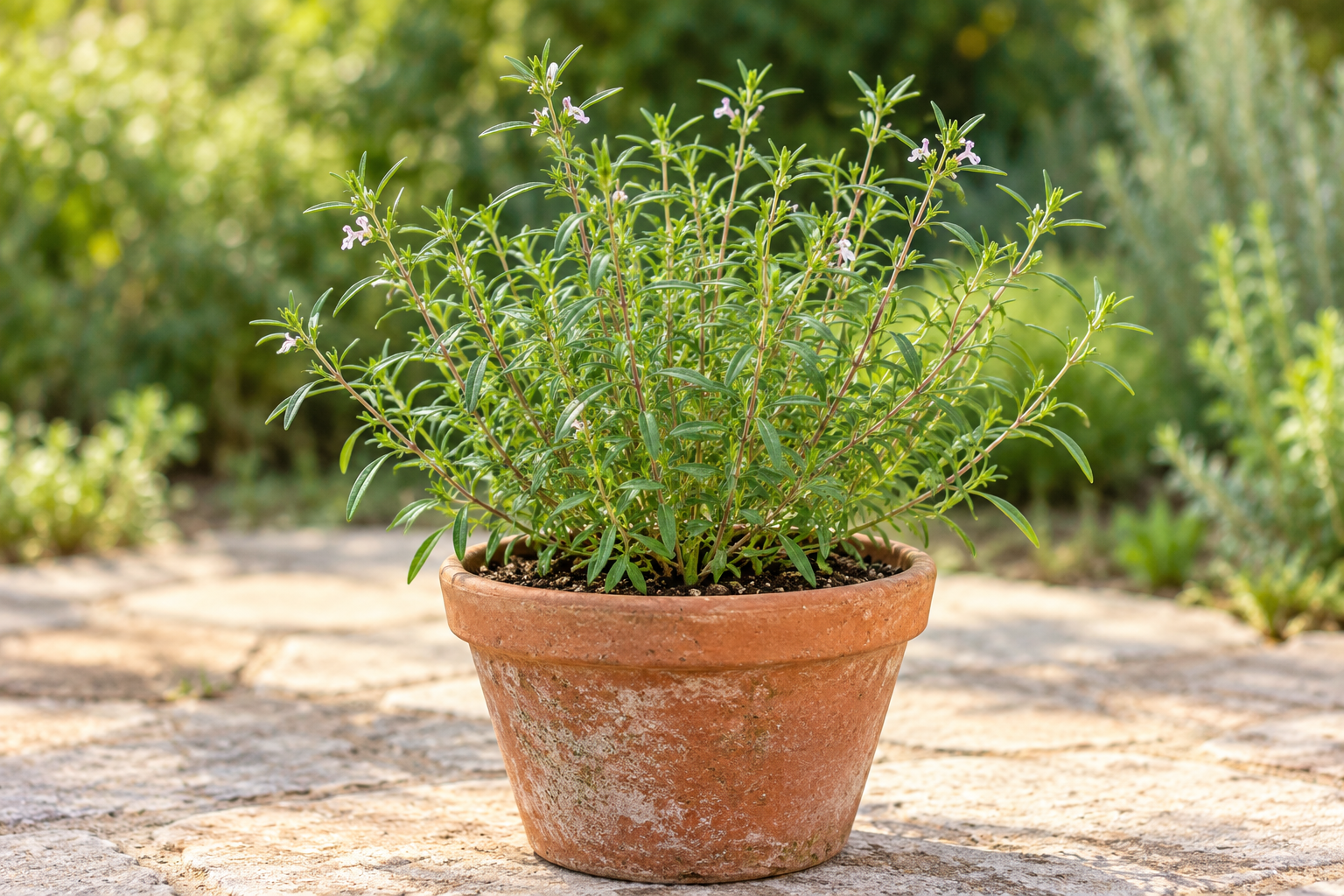
Summer savory has slender, aromatic foliage and small flowers. Use a reliable plant label or seed packet to confirm its identity; the word “savory” alone can refer to different species. [2] [4]
| Check | Summer savory | Winter savory |
|---|---|---|
| Botanical name | Satureja hortensis | Satureja montana |
| Life cycle | Annual crop | Perennial plant |
| Planning consequence | Establish new plants for another crop | Manage an established plant over multiple seasons where conditions suit |
The life-cycle distinction matters more than the similar names. Perennial overwintering and propagation advice should not automatically be applied to an annual summer savory crop. [1]
Grow it when you want a compact culinary herb to pick in small amounts. The leaves can season soups, vegetables and bean dishes, fresh or dried. Start with a modest planting that matches how much you use. [3]
🌱 Beginner checklist
- Confirm that the label says Satureja hortensis.
- Check the packet’s sowing method and whether enough suitable growing time remains.
- Choose a sunny site and check how it drains after watering or rain.
- Decide between direct sowing, raising seedlings and buying young plants.
- Prepare clean seed containers and seed-raising mix if starting under cover. [11]
- Plan regular observation during establishment, rather than setting an automatic watering interval.
- Use the growing-window framework before sowing a large batch.
📅 Seasonal growing calendar
Use this table as a decision calendar. Advice to transplant after frost risk comes from summer-savory cultivation guidance; the heat, rainfall and growing-space checks are practical adaptations for local conditions. They are not a tested month-by-month schedule for every Australian region. [3]
| Conditions or stage | Useful action | What to review |
|---|---|---|
| Cold conditions or frost risk remains | Wait to plant outside, or raise a small batch in a suitable protected setup. | Light, warmth and safe transplant conditions. [3] [11] |
| Suitable weather and active growth ahead | Sow or plant using the packet method; acclimatise indoor-grown seedlings. | Establishment before increasing harvest. [3] [11] |
| Hot, dry or windy conditions | Check container moisture and exposure more often; respond to actual drying. | Whether the root zone is drying or still wet. [7] |
| Prolonged rain, humidity or crowded seedlings | Check drainage and ventilation; avoid maintaining a sealed, congested seedling environment. | Seedling condition and persistent wetness. [8] |
| Buds, flowers or declining leafy growth | Choose between another light harvest, seed production or a replacement batch. | Healthy remaining foliage and time for further growth. [1] [3] |
In frost-prone areas, base outdoor planting on local frost risk rather than the season name alone. In mild or warm regions, a long frost-free period does not remove the need to assess heat, rainfall and drainage. Use the herb climate and hardiness guide to interpret your setting.
Northern Hemisphere adaptation
Apply the same sequence around your local growing season: suitable sowing conditions, establishment, leafy growth, harvest and renewal. Retain local frost and weather checks. Do not simply copy Australian month names or assume that a six-month date shift accounts for your climate.
How to grow summer savory
Choose seeds or young plants
Direct sowing keeps the plant in its final position. Raising seedlings lets you manage the early environment, but creates a later transplanting step. Purchased young plants can be convenient when you need only a few; check their identity and condition before buying. Summer savory can be established from seed or transplants. [3]
Remove nearby weeds while plants are small and avoid rough cultivation around their bases. Historical field observations found weed competition and anchorage problems during establishment; they do not establish that one starting method is always superior. [5]
Sow shallowly and manage the seedling stage
Summer-savory seed is sown shallowly because light helps germination. Follow the method supplied with your seed instead of burying it under a thick layer. For trays, use clean containers with drainage and a suitable seed-raising mix. Moisten the mix first, sow thinly and label the batch. [3] [11]
Keep the sown layer from drying out without leaving it saturated. Once seedlings appear, provide adequate light and room to develop. If a cover is used, manage ventilation and avoid crowding. Clean equipment, suitable mix and careful moisture management help reduce seedling problems. [8] [11]
Use the packet’s expected waiting period together with the conditions you provided. An empty-looking tray is not enough evidence to sow again immediately. Record the sowing date and first emergence; the herb seed germination guide explains how to interpret those stages.
Choose a sunny position and suitable soil
Summer savory grows best in full sun and well-drained soil. Avoid a spot that stays waterlogged. Its preference for neutral to alkaline conditions is not a reason to add lime automatically: assess the existing soil before trying to alter it. [2]
Watch the actual light at your site. A bright-looking verandah can receive little direct sun, while a small pot beside a hot wall has a different exposure from a bed. The herb sunlight guide helps you assess the position before blaming nutrition or watering.
Plant out and grow in pots
Acclimatise indoor-grown seedlings gradually to outdoor light, wind and temperature before planting. Handle them carefully and keep the root ball intact where possible. Plant at the previous growing depth and allow room for the plant’s eventual spread. [1] [11]
For containers, use a pot with drainage holes and an appropriate potting mix. RHS suggests a pot at least 20 cm wide and deep for savory; allow additional space when growing more than one plant. [1] Keep outlets clear and check that water can escape. Summer savory appears in an Australian container-herb demonstration, but that example does not make one shared-pot recipe compulsory. [6] [7]
A container gives you more control over placement; it also limits the root space and available water. Check the mix as the crop develops. For the difference between garden soil and container media, use the soil mixes guide.
Water according to establishment and drying
Aim for enough moisture to support the plant while retaining drainage and air around the roots. Young plants and recently transplanted roots need attention before they can support steady growth. Summer savory’s preference for moisture does not mean it should sit in damp, poorly drained soil. [4]
Check beneath the surface of the medium and compare the pot’s weight with how it feels after watering and draining. Consider recent rain and weather. A wilting plant in dry mix calls for a different response from one standing in wet mix. Water when the checks show a need, then reassess the root zone. Use the herb watering guide for the wider method.
Feed with restraint
Account for the nutrients already in the soil or mix. General herb guidance favours restrained feeding; adding more fertiliser is not a reliable first response to every pale or slow plant. Check light, drainage, moisture and root condition first. If feeding is appropriate, follow the product directions for the plant and growing setup. [7]
Container nutrient supplies and garden soils differ. The fertilising herbs guide helps you choose an approach without imposing one dose or interval on every crop.
🌿 Grow Herb Lab framework: Sow now, shelter or wait?
- Observe. Identify the herb and starting material. Read the packet and check the forecast, light and drainage at the proposed site.
- Decide. Choose direct sowing, a suitable protected start, young plants or a later attempt. A protected start is useful only if you can provide the necessary aftercare.
- Act. Establish a manageable batch and label it. Correct a known site problem before expanding the planting.
- Review. Look for continued growth, sound establishment and suitable moisture before taking larger harvests. If progress stalls, investigate the cause rather than changing several inputs at once.
For example, sowing into a persistently wet container does not become a better plan simply because the calendar says spring. Correct the setup or choose another position before adding more plants.
⚠️ Common mistakes
- Buying by common name alone. Confirm the species so you know whether you are managing summer or winter savory.
- Burying small seeds too deeply. Use the packet’s shallow-sowing method. [3]
- Leaving seedlings crowded or poorly lit. Review spacing, airflow and light as they grow. [8] [10]
- Treating every symptom with extra water or feed. Investigate the growing conditions first.
- Taking a large harvest from a weak plant. Let establishment and remaining foliage guide your picking.
- Expecting perennial renewal from an annual. Plan another batch when the useful crop is finished. [4]
🛠 Common problems and troubleshooting
Summer savory is not usually described as a notably pest-prone crop, but healthy appearance depends on conditions. Inspect the plant and its growing medium before deciding what is wrong. [4]
| Observation | Checks before deciding | Proportionate first response |
|---|---|---|
| Little or no emergence | Sowing date, packet method, seed condition, moisture and temperature context. | Correct a specific mismatch; allow the appropriate waiting period rather than repeatedly disturbing the seed. [3] [11] |
| Long, thin or leaning growth | Available light and crowding; check the whole setting. | Improve the light arrangement and give seedlings room. See the leggy herbs guide. [10] |
| Seedlings collapse or decay | Crowding, humidity, ventilation and growing-medium condition; damping off is one possibility. | Isolate the problem batch, avoid reusing affected growing material and improve prevention for the next sowing. Collapse is not ordinary stretching. [8] |
| Wilting or yellowing | Whether the root zone is dry, wet or poorly drained; recent planting and exposure changes. | Address the observed condition before adding water or fertiliser. [4] [7] |
| Flowers and less useful leafy growth | Plant identity, healthy remaining shoots and the stage of the crop. | Choose light picking, seed production or replacement; flowering alone does not prove disease. [1] |
If you find insects, inspect closely enough to identify them and any associated damage before choosing a response. Do not apply a routine spray just because an annual crop looks tired.
Harvesting, preserving and uses
Pick small amounts and retain useful growth
Begin with light picking once the plant is established and producing enough foliage to spare. Snip tender leafy shoots instead of stripping the plant bare. Regular shoot-tip harvesting can encourage fresh growth; the amount you can take depends on the plant’s condition. [1]
Illinois Extension recommends gathering leafy tops as buds appear. That is a useful harvest stage, not a rule that all flowering plants must be discarded. Decide whether you want more leaves, some flowers or seed, and leave enough healthy growth for the response you expect. [3]
Use fresh or dry a small batch
Strip the leaves from tougher stems and use them to season food. Start with a little in beans, soups, vegetables or other dishes, then adjust to taste. [3]
For drying, work with sound material in small batches. Good airflow and low humidity matter; do not assume that a tightly packed bunch will dry evenly. Store only thoroughly dried leaves in clean containers that keep out moisture, in a cool, dark place. Label the contents and date. [9]
Plan the next crop
Seed is the usual way to establish another summer-savory crop. If saving your own, allow selected healthy plants or shoots to flower and set seed; keep the material labelled. Self-sown seedlings are possible, but they are not a dependable replacement plan. [1]
Once a plant has finished producing useful healthy growth, repeated cutting or feeding cannot be relied on to restart its annual life cycle. Assess whether another batch would be more useful. The herb lifespan guide explains how useful harvest periods and plant life cycles differ.
🌿 Frequently asked questions
Is summer savory a perennial?
No. Satureja hortensis is annual. Winter savory, Satureja montana, is perennial; confirm the name before applying long-term care advice. [4]
Can summer savory grow in a pot?
Yes. Provide drainage, a suitable mix and enough light, then check moisture as the container dries. Keep the crop accessible enough to inspect and pick. [6] [7]
Can I grow it indoors?
A protected start and long-term indoor production are different tasks. Indoor growing needs adequate light; a dim kitchen shelf is unsuitable for strong growth. If natural light is insufficient, use suitable plant lighting or choose a better growing position. [10]
Why have my seeds not appeared?
Compare the sowing date and conditions with the packet instructions. Check the shallow-sowing method and whether the medium has dried or stayed saturated. Avoid diagnosing failure from elapsed days alone. [3] [11]
Can I harvest after flowers appear?
Flowering does not automatically end every useful harvest. Inspect the leafy growth and choose between picking, seed production and renewal. Do not remove most of a struggling plant in the hope of forcing a fresh crop. [1]
How do I choose between keeping and replacing a declining plant?
Check whether a cultivation problem is limiting otherwise healthy growth or whether the annual crop is largely finished. Correct a clear problem when useful growth remains; plan replacement when continued effort is producing little usable foliage.
🌿 Key takeaways
- Identify summer savory correctly and plan it as an annual crop.
- Match establishment to a suitable growing window, light and drainage.
- Use shallow sowing and attentive seedling aftercare.
- Check actual moisture and growth before watering, feeding or harvesting more.
- Choose deliberately between leaves, seed and a replacement batch.
🌿 What success looks like
The plant establishes, continues producing healthy leafy growth and supplies useful small harvests for your cooking. You can recognise a change in growth stage and plan renewal without expecting one annual plant to remain productive indefinitely.
🌿 Continue learning
📚 Reference guidance
- Use the herb seed germination guide when planning another sowing.
- Read the herb lifespan guide when deciding whether to keep or replace a crop.
🛠 Problem solving
- Use Leggy Herbs to investigate stretched or sparse growth.
📥 Free resources
- Get the Beginner Herb Growing Kit for practical starting checklists and reference sheets.
🌿 Final thoughts
Summer savory is most useful when its care and harvest expectations fit the plant you are actually growing. Start with a manageable crop, observe its response and use those observations to improve your next sowing.
Sources
- [1] RHS — How to grow savory
- [2] RHS — Satureja hortensis plant profile
- [3] Illinois Extension — Savory Summer
- [4] NC State Extension — Satureja hortensis
- [5] Montana State University — Summer Savory research summary
- [6] ABC Gardening Australia — Herbilicious
- [7] University of Minnesota Extension — Growing herbs in home gardens
- [8] RHS — Damping off
- [9] University of Minnesota Extension — Preserving food at home Drying
- [10] University of Minnesota Extension — Lighting for indoor plants and starting seeds
- [11] University of Minnesota Extension — Starting seeds indoors