Choose herbs by the conditions they will actually face: local cold risk, seasonal heat and rainfall, and the growing spot. Use climate maps to understand broad patterns and hardiness ratings to assess cold tolerance, then check the herb, its growth stage and the forecast before planting. A suitable growing window can matter more than a zone label. [1, 4, 5]
This guide helps you decide whether to plant now, adjust the setup, wait for another season or choose a different herb. Australia is the main context, with a Northern Hemisphere adaptation below. Detailed light, watering and individual herb care belong in the linked growing guides.
🌿 In this guide
- 🌿 Quick facts
- 🌿 Climate and hardiness labels
- 🌿 Read your local climate
- 🌿 Check your microclimate
- 🌱 Beginner checklist
- 🌿 Choose a growing window
- 🌿 Compare herb examples
- 🌿 Adapt the growing setup
- 📅 Seasonal growing calendar
- ⚠️ Common mistakes
- 🌿 Frequently asked questions
- 🌿 Continue learning
🌿 Grow Herb Lab quick facts
| Question | Practical starting point |
|---|---|
| What am I deciding? | Whether this herb suits this place and growing period. |
| What should I check first? | Plant identity, cold risk, heat, rainfall pattern and the actual position. |
| Which records help? | Relevant local weather-station data, forecasts and your own garden notes. |
| What does hardy mean here? | Cold tolerance is only one part of suitability; survival and useful harvest differ. |
| What if the match is poor? | Change the season, position or protection, or choose another herb. |
Climate, weather and hardiness are different tools
Weather describes current or upcoming conditions. Climate describes patterns over many years. A microclimate is the exposure around a particular bed, wall or pot. These scales answer different questions: a regional map cannot tell you how cold a low corner of your garden will be tonight. [1, 4]
Cold hardiness concerns a plant’s ability to withstand low temperatures. A growing season is the period suitable for the growth or harvest you want. An annual can be useful within one season without surviving winter; a perennial may survive while producing little harvestable growth. [5, 10, 12]
| System or resource | What it describes | How to use it carefully |
|---|---|---|
| BOM climate classifications | Broad patterns using temperature/humidity, seasonal rainfall or Köppen classifications. | Check which scheme and record period you are viewing. A climate name is not a plant survival rating. [1] |
| USDA plant hardiness zones | Average annual extreme minimum winter temperature; the current map uses 1991–2020 data. | A general perennial cold guide, not a heat rating, planting calendar or prediction of the coldest possible night. [4] |
| RHS hardiness ratings | H1a–H7 categories with absolute minimum winter-temperature ranges, developed in a UK growing context. | Read the rating’s conditions as well as the temperature range. It is not the same measurement as a USDA zone. [6] |
| Australian hardiness archive | Iain Dawson’s 1991 map, using a separate Australian numbering scheme. | Historical context only. Do not use its zone numbers as USDA numbers or treat it as a current postcode lookup. [5] |
Do not build a universal conversion between these labels. Record the named system and its meaning whenever you use a rating. A label without a system, source or plant identity is a prompt to ask the supplier for clarification.
Read your local climate before choosing herbs
Start with the regional pattern, then narrow the decision to local records and upcoming weather. Use this short lookup:
- Open the BOM climate classifications and identify the relevant temperature and rainfall patterns. Check the map legend and period rather than relying on a familiar climate name. [1]
- Use Climate Data Online to find a nearby station. Compare location and elevation where available; the nearest station may be a poor match for a sheltered inland garden or exposed coast. [2, 5]
- Look at the available temperature and rainfall statistics, their record periods and any gaps. Note when colder, hotter, wetter and drier conditions usually occur. [2]
- For a planting decision now, check the local forecast as well as those historical patterns. Use a weather service’s frost information rather than assuming a mild monthly average rules out frost. [3]
A mean monthly minimum summarises daily minimum temperatures for that calendar month over the stated record. A USDA average annual extreme minimum averages the coldest temperature from each year. Neither is a forecast or the lowest temperature that could ever occur. Keep those measures separate when comparing a plant label with station data. [2, 4]
Make a simple note: “My main seasonal constraint is ___; I will check ___ before planting.” In a cool or elevated garden, begin with cold exposure. Near the coast, verify the actual site rather than assuming frost-free conditions. In tropical or subtropical settings, examine heat and rainfall seasons instead of importing a southern spring planting date. These are checking priorities, not new climate-zone definitions. [1, 5]
Check the microclimate where the herb will grow
Inspect the space at plant height. Cold air can collect in low spots; buildings and fences can shelter one position while funnelling wind through another. Walls and paving can increase heat exposure. A balcony, courtyard and open bed in the same suburb may need different choices. [3, 7]
- Cold: is this a low pocket, exposed edge or place where frost lingers?
- Heat and wind: does afternoon exposure or nearby paving make the position harsher?
- Seasonal light: do changing shadows leave the winter growing spot darker?
- Root conditions: does this bed drain freely, and does the pot behave differently from the ground?
Overseas aspect advice needs interpretation. A warm south-facing wall in a UK guide is not an Australian placement instruction. In Australia, north-facing exposure commonly receives more sun, but buildings, trees and the season can override a compass label. Observe the actual spot. [7]
For a separate light assessment, use the Herb Sunlight Reference Guide. Keep the record of light exposure alongside your climate notes.
🌱 Beginner checklist
- Identify the herb, including the species or cultivar if the label provides it.
- Decide what you want: fresh leaves this season, seed, or a plant to retain across years.
- Name the main seasonal risk and inspect the intended growing spot.
- Allow for a young transplant or recently sheltered plant, rather than assuming established-plant tolerance. [8]
- Check the coming weather and choose a practical response before planting.
- Record the date, position and later plant response so the next decision uses local evidence.
🌿 Grow Herb Lab Framework: Can this herb grow here now?
Use this sequence to turn the reference into a decision. The method applies the evidence in this guide; it is not a universal plant-rating system.
1. Observe
Name the herb, its growth stage and your harvest goal. Combine local seasonal records, the forecast and the actual growing spot.
2. Decide
Identify the constraint most likely to matter first: cold, sustained heat, an unsuitable wet period, or exposure around the plant. Check more than one factor if the symptoms are unclear.
3. Act
Plant now if the match is suitable. If one manageable exposure is the issue, move a pot or arrange appropriate protection. If the season remains unsuitable, wait for a better window or choose another herb.
4. Recheck
Follow the weather and inspect the plant after the change. Look for growth appropriate to the season and watch root-zone moisture. Revise the plan if the original constraint remains.
For example, cold-sensitive basil and a forecast frost call for waiting or suitable protection. Coriander grown for leaves during hot, dry weather may be better scheduled for a cooler period. These are different decisions, even if both plants are sold together as herbs. [9, 10]
Compare herb examples by their growing constraints
These examples show different decisions; they are not a complete herb hardiness catalogue. Check the exact plant and local experience before extending an example to a whole group.
| Herb | Constraint to understand | Practical decision |
|---|---|---|
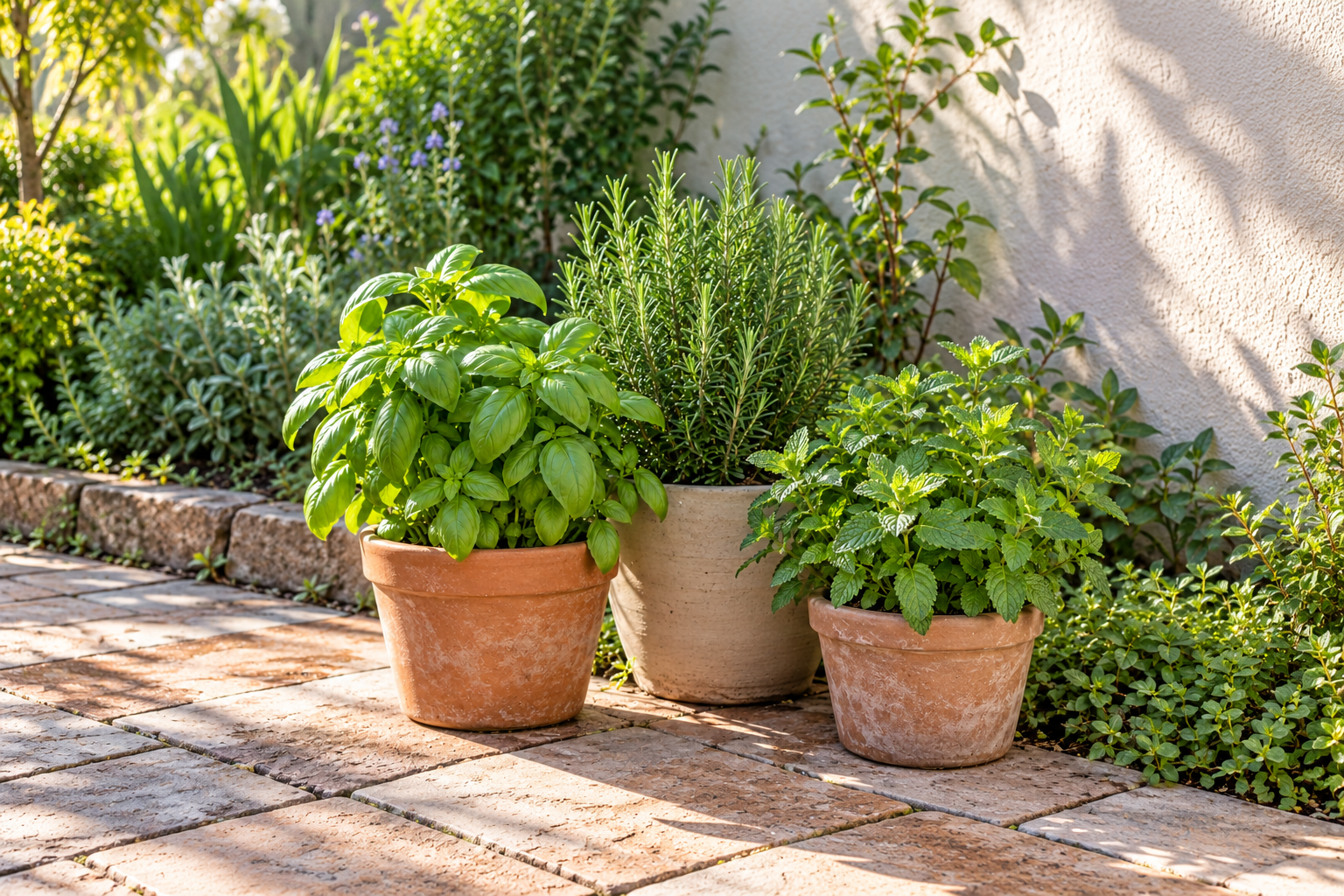
| Sweet basil Ocimum basilicum | Tender growth needs warmth; cold and damp conditions are poor starting conditions. | Choose a warm, frost-safe growing window. Do not assume every plant sold as basil has the same habit or tolerance. [9] |
| Coriander Coriandrum sativum | An annual with different leaf and seed goals; hot, dry weather encourages earlier flowering. | For leaves, consider a cooler window. Shade and suitable moisture may delay flowering, but cannot promise to prevent it. [10] |
| Rosemary Salvia rosmarinus | A perennial needing sun and drainage; cold tolerance does not remove the risk of wet roots. | Assess winter wetness and plant establishment alongside cold exposure. Avoid one universal survival temperature for every cultivar and site. [11] |
| Mint Mentha species and cultivars | Many mints are hardy perennials but can die back in colder weather. They generally need more moisture than rosemary. | Allow for seasonal rest and contain spreading growth. A surviving root system does not mean fresh leaves every month. This example excludes unrelated “mints”. [12] |
Adapt the growing setup to the limiting condition
Frost-prone sites
Delay tender planting until local frost risk has eased. Where practical, move a vulnerable pot to suitable shelter or use horticultural fleece for an expected cold night. Acclimatise plants raised under protection before planting out. Protection has limits; it does not establish a new guaranteed hardiness rating. [8]
Read frost information even when the forecast air minimum is above zero. Ground level can be colder than the measured air: BOM uses an air temperature of 3°C or below as an indicator of frost potential. This is a forecasting indicator, not a universal herb-damage threshold. [3]
Hot dry periods
Check the potting mix before assuming a wilted plant needs water. Containers can dry quickly in hot, windy conditions, and a small pot beside a hot surface deserves closer attention. Move a manageable pot away from the harshest exposure or provide temporary shade where appropriate, while retaining useful light. [13]
Use the Herb Watering Reference Guide for moisture-based watering decisions. A climate label is not a watering interval.
Persistently wet conditions
Separate humidity in the air, rainfall and waterlogged roots. They are different observations. For rosemary, check whether rain leaves the root zone persistently wet; a sunny position alone will not compensate for unsuitable drainage. Choose a better-drained setup or a more suitable growing period rather than assuming cold is the only winter risk. [11]
For the growing medium and drainage decision, see Best Soil for Herbs. This climate reference does not prescribe one mix for every herb.
Containers and young plants
A pot allows relocation, but its roots are more exposed to cold than roots in the ground. Size and material also affect drying and heating. Check shelter, light and root moisture when moving it. [6, 13]
Acclimatise young or recently sheltered plants gradually; an established plant’s hardiness does not prove a new transplant is ready for abrupt exposure. [8]
When the plant struggles
Compare the timing of damage with recent weather, planting or relocation, and inspect moisture and drainage. If frost damage is possible, do not rush into heavy pruning while further frost is expected. Allow time to assess viable growth; seek local advice when the plant’s condition or identity is uncertain. [8]
For a broader assessment when climate does not explain the decline, use Why Herbs Keep Dying. Keep observations separate from the suspected cause.
📅 Seasonal growing calendar
Use this as a calendar of conditions. Australian regions differ too much for one national month grid: select the row that describes the actual growing period, then check the herb and the forecast. [1]
| Seasonal condition | Check | Useful action and limit |
|---|---|---|
| Cold or frost-risk period | Local frost forecast, site exposure and plant stage. | Delay tender plants or provide appropriate temporary protection. A warm afternoon does not establish a safe night. [3, 8] |
| Warming transition | Whether cold nights still interrupt the warmer pattern. | Prepare a warm-season planting when the local window is suitable; do not use one warm day as the whole decision. [9] |
| Hot dry period | Pot moisture, wind, harsh surfaces and leaf-versus-seed goals. | Reposition vulnerable pots if needed; consider a cooler window for coriander leaves. Do not treat all herbs as equally heat-tolerant. [10, 13] |
| Wet season or prolonged wet weather | Rainfall pattern and how the actual root zone drains. | Address poor drainage or change the setup. High humidity alone does not demonstrate waterlogging. [1, 11] |
| Cooling or seasonal slowdown | Whether the plant is resting, flowering or nearing the end of its useful crop. | Plan the next crop or allow appropriate rest. Perennial mint may survive without maintaining continuous leafy harvest. [10, 12] |
Northern Hemisphere adaptation
Use your local weather service, frost seasons and rainfall pattern to select the relevant row. Do not simply move Australian months by six: elevation, maritime influence, summer heat and local wet seasons can alter the growing window. Reassess aspect advice for your hemisphere, then check shadows and shelter at the actual site. [5, 7]
⚠️ Common mistakes
- Mixing zone numbers: write down the named system before comparing a label with a map. [4, 5, 6]
- Reading an average as a cold limit: check what the statistic actually measures. [2, 4]
- Treating a map as a garden guarantee: inspect the bed or pot and use local experience. [5, 7]
- Copying overseas planting months or aspect: translate the conditions, then verify your site.
- Expecting a perennial to harvest continuously: plan for seasonal changes in useful growth. [12]
- Watering every wilt automatically: check the root-zone moisture and exposure first. [13]
🌿 Frequently asked questions
Which climate or hardiness system should I use in Australia?
Use BOM climate information for broad patterns, local station records for context and forecasts for immediate decisions. Read plant hardiness labels in their named system. The 1991 Australian archive is historical, not a current locality lookup. [1, 2, 5]
Can I use a USDA rating printed on a plant label?
Yes, as one cold-tolerance clue. It does not establish heat suitability or year-round productivity, and the US map is not an Australian postcode service. Match the exact plant and assess local conditions separately. [4]
Can frost occur if the forecast is above zero?
Yes. The ground can be colder than the air temperature used in the forecast. Check local frost information and the growing spot rather than using 0°C forecast air temperature as the only trigger. [3]
Does a warm region mean herbs grow well all year?
No. Heat, rainfall and the herb’s lifecycle can still limit the result. Coriander may flower sooner in hot, dry weather; rosemary still needs suitable drainage. [10, 11]
Why can neighbours grow the same herb differently?
Their shade, shelter, wind, cold-air pooling, containers and drainage may differ. Compare the actual growing spots before concluding that one plant disproves the regional advice. [3, 7]
Can a container or greenhouse make an unsuitable herb suitable?
It may help, if the resulting conditions suit the herb. Check light, temperature and moisture under cover; container roots still need protection from extremes. Judge what you can maintain. [6, 13]
How should Northern Hemisphere readers use the seasonal guidance?
Follow the condition-based calendar with local forecasts and seasonal records. Adapt aspect and timing to your own site instead of copying Australian dates.
🌿 Key takeaways
- Use climate classifications, cold-hardiness labels and forecasts for their separate purposes.
- Match the herb and harvest goal to a workable local growing window.
- Check the actual position and root conditions before changing the setup.
- Record what happened so future choices reflect your garden.
🌿 What success looks like
You can explain why this herb belongs in this position now, name the condition you will monitor and recognise when to change course. During a suitable active period, new growth supports the harvest you planned. Seasonal rest, flowering for seed or planned replacement can also be appropriate outcomes; winter survival alone is not a promise of continuous harvest. [9, 10, 12]
🌿 Continue learning
🌿 Related growing guides
- Basil — apply the warm-season decision.
- Rosemary — assess the perennial growing setup.
- Mint — plan for moisture and seasonal growth.
📚 Reference guidance
- Herb sunlight requirements — assess light at the growing spot.
- Herb watering guide — check moisture before watering.
- Best soil for herbs — assess the growing medium and drainage.
🛠 Problem solving
- Why herbs keep dying — investigate a wider pattern of decline.
📥 Free resources
- Free herb growing kit — plan your next growing steps.
🌿 Final thoughts
A useful climate reference ends with a practical choice. Match the herb to the conditions you can provide, and let local observations improve that choice over time.
Sources
1 Bureau of Meteorology — Climate classification maps
2 Bureau of Meteorology — Climate Data Online
3 Bureau of Meteorology — What is frost
4 USDA Agricultural Research Service — How to use the maps
5 Australian National Botanic Gardens research archive — Plant hardiness zones for Australia (Iain Dawson, 1991 research archive).
6 Royal Horticultural Society — RHS hardiness ratings
7 Royal Horticultural Society — Understanding microclimates in your garden
8 Royal Horticultural Society — Frost damage
9 Royal Horticultural Society — How to grow basil
10 Royal Horticultural Society — How to grow coriander
11 Royal Horticultural Society — How to grow rosemary
12 Royal Horticultural Society — How to grow mint
13 Royal Horticultural Society — How to water containers