Small, dark flies that repeatedly lift off the potting mix around your herbs may be fungus gnats. Start by finding the pot or tray they keep returning to. Check whether its mix stays damp between waterings, empty any trapped water and put a yellow sticky card just above the mix to track adult activity. If seedlings are collapsing, check the stems at mix level straight away. A few flies around a healthy pot and a tray of collapsing seedlings call for different responses. [1] [2] [6]
Adult fungus gnats are usually a nuisance indoors. The larvae live in the mix and can damage young roots or the base of soft cuttings. You can often reduce breeding around an established herb by changing how you water. Germinating seeds, seedlings and unrooted cuttings still need suitable moisture, so begin by correcting saturation and poor drainage. [1] [3]
🌿 In this guide
- Quick facts
- Recognise fungus gnats and lookalikes
- Beginner checklist
- Why they breed in pots and trays
- Grow Herb Lab Framework
- What to do about fungus gnats
- Prevent another outbreak
- Common mistakes
- Frequently asked questions
- What success looks like
- Continue learning
🌿 Grow Herb Lab Quick Facts
| What to check | What to look for |
|---|---|
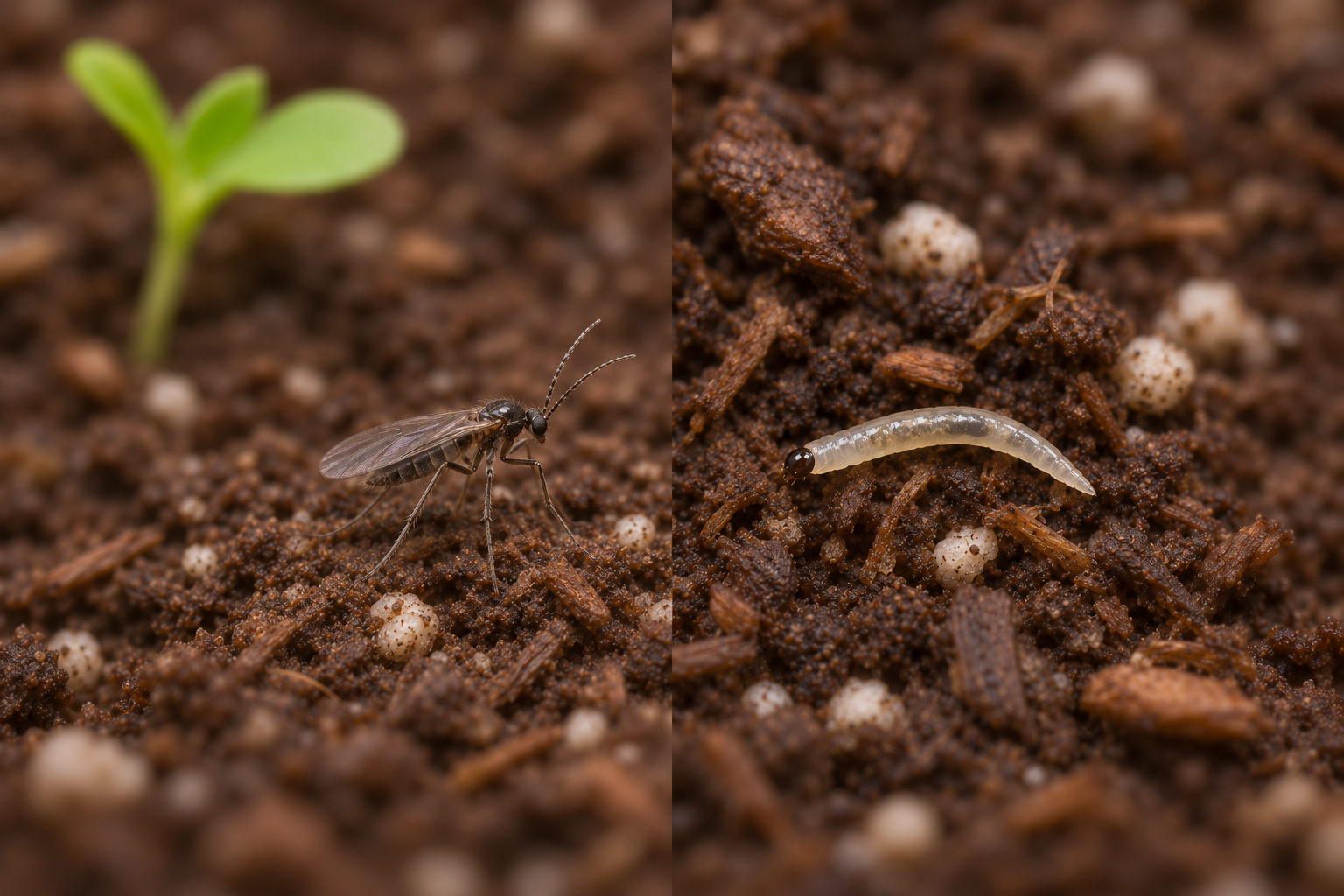
| Adults | Slender, dark flies a few millimetres long, with long legs and antennae. They often run across the mix or fly in short bursts nearby. [1] [2] |
| Larvae | Small, legless, pale or translucent bodies with dark heads, usually in moist mix. [1] [3] |
| Likely breeding site | Potting or propagation mix that stays damp, especially where dead plant material is breaking down. [1] [2] |
| Plants to check first | Seedlings and soft cuttings, especially where growth has stalled or plants are wilting. [1] [3] |
| First check | Compare nearby pots. Feel the mix, check the drainage and look for water trapped in saucers or outer pots. [1] |
| Yellow sticky card | Catches adults and helps you track where and when activity changes. [1] [5] |
Recognise fungus gnats and lookalikes
A fly at the window gives you a reason to look around the room. The best clue is where similar flies repeatedly gather or take off. Look closely at their shape and compare what is happening around your plants, the fruit bowl and any damp propagation equipment. [1] [4]
| What you see | Where to check | What to do next |
|---|---|---|
| Dark, delicate flies with long legs and antennae, often moving close to the mix | Pot surfaces, seedling trays and cuttings in damp mix | Compare pots and check where adult activity is highest. [1] [2] |
| Small, often light-brown flies around overripe fruit or fermenting residues | Fruit bowls, scraps and unwashed drink containers | Check for a vinegar fly breeding source and remove it. [4] [8] |
| Stockier flies with short antennae around persistent algae | Algae on damp trays or benches, especially in protected propagation areas | Check for shore flies and address the damp, algae-covered surfaces. [1] |
Check the plant as well as the flies
Wilt or slow growth can have several causes, including a root zone that is too wet or too dry. Feel the mix below the surface where you can do so without disturbing young roots. If seedlings are falling over and the stems look pinched, thin or water-soaked at mix level, follow Damping Off in Herb Seedlings promptly, even if gnats are present. [1] [6]
🌱 Beginner Checklist
- Watch where the flies land or lift off when you approach the pots.
- Compare the pots and trays nearby. Give seedlings and rooting cuttings first attention.
- Check the mix, drainage holes and saucers for persistent wetness or trapped water.
- Set a yellow sticky card just above the mix where you see the most activity.
- Check plant vigour and stem bases. If you need more evidence of larvae before choosing a response, check the mix with potato bait. [1] [2] [5] [6]
Why they breed in pots and trays
Adults lay eggs in damp growing mix. The larvae feed mainly on fungi and decaying material. When their numbers build up, some can feed on fine roots or soft cutting bases. Larvae pupate in or near the mix surface before adults emerge. Eggs, larvae and pupae can already be present when you change the watering, so you may still see flies emerging for a while. [1] [2] [3] [4]
🌿 Grow Herb Lab Framework: Which pot needs action first?
Work through the table using what you can see in the pot and on the plant. If a tray is declining quickly, check the stems and growing conditions straight away. [1] [3] [6] [8]
| What you observe | What to decide | First action |
|---|---|---|
| A few adults around a healthy, established herb | The pot needs monitoring | Set a sticky card and review watering and drainage. |
| Repeated catches by a pot that stays wet | The pot may be supporting breeding | Empty trapped water, clear debris and check the root zone before watering again. |
| Larvae in a propagation tray, or rising catches alongside declining young plants | The tray needs prompt inspection | Check stems and mix, keep moisture appropriate to the plant stage and seek local advice if decline continues. |
| Seedlings collapsing with thin, water-soaked stems | Damping off is possible | Follow the damping-off guide while checking the fly activity separately. |
| Flies gathering around fermenting fruit or algae | The breeding site may be elsewhere | Inspect the fruit or algae before treating a herb pot. |
What to do about fungus gnats
1. Find the source and track adult activity
Put a yellow sticky card just above the mix in the suspected pot. If several pots could be involved, use cards of similar size and position them at similar heights. Compare catches over equal periods. This helps you spot a trend and decide which pots warrant a closer check. The cards catch adults while the immature stages develop in the mix. [1] [5]
If seeing larvae would help you decide what to do, press the cut face of a fresh slice of raw potato against the mix. Turn it over after a few days and check the underside for pale, dark-headed larvae, then remove the slice. If you see none, continue checking the likely breeding site and the condition of the plants. [1] [5]
2. Adjust moisture to the growing stage
| Growing stage | What to change |
|---|---|
| Established herbs | Let the surface dry between waterings where the herb tolerates it. Check moisture below the surface, make sure drainage holes are clear and empty saucers and outer pots after watering. Use the Herb Watering Guide to match the decision to the herb and its root zone. [1] |
| Germinating seeds and seedlings | Keep the seed zone or young roots appropriately moist. Start by draining excess water from the tray and checking the mix before watering again. Use How to Water Herb Seedlings for the details. [3] [6] |
| Soft cuttings rooting in mix | Keep the mix moist enough for rooting, with a way for excess water to drain. Check the cutting bases and clear fallen leaves. Review the setup in How to Grow Herbs from Cuttings. [1] [3] |
3. Reassess before escalating
If catches remain high, check neighbouring pots, damp debris and any mix that stays wet after watering. An established herb may benefit from repotting if its mix has broken down and holds too much water. Get local horticultural advice if seedlings or cuttings continue to decline, or if you are unsure what insect you have found. [1] [3] [5]
Some beneficial nematodes can target fungus gnat larvae. Ask a local horticultural adviser whether a suitable option is available for your setup. For any regulated treatment on herbs you plan to eat, check the current Australian label or applicable permit for the pest, crop and growing situation. Follow the directions, including any harvest withholding period. [3] [5] [7]
Prevent another outbreak
Choose a potting or propagation mix that drains well and suits the plant’s stage. Remove fallen leaves, empty trapped water and keep unused mix in a closed bag or container. Check the mix and look for adults around newly bought plants before placing them among your herbs. [1] [3] [4]
📅 When to check more often
- During propagation. Check seedlings and soft cuttings closely while they still need regular moisture. [3]
- When days turn cooler or the growing spot gets less light. Check how long the mix stays damp before watering at your usual interval. [5]
- In warm indoor spaces. Damp mix can support successive generations even when outdoor conditions change. Watch the pots and trays you water most often. [4]
⚠️ Common Mistakes
- Relying on sticky cards alone. Check what keeps the mix damp and correct the breeding conditions as you monitor adults. [1]
- Letting a whole propagation tray dry out. Drain standing water and maintain the moisture that germinating seeds or young roots need. [3] [6]
- Judging moisture by the surface alone. Check deeper in an established pot before watering. The surface and root zone can dry at different rates. [1]
- Treating the first pot you see a fly beside. Check where the flies keep gathering and look for nearby fruit, damp mix or algae. [1] [4] [8]
- Copying an overseas product recipe. Base any treatment of edible herbs on the current Australian label or applicable permit. [7]
🌿 Frequently Asked Questions
Can fungus gnats kill a herb?
Adults are usually a nuisance. Large numbers of larvae can damage roots, especially in seedlings and young plants. If an established herb wilts, check the root-zone moisture and drainage as well as looking for larvae. [1] [3]
Will a yellow sticky card get rid of them?
A card catches adults and helps you see whether their activity is rising or falling. For ongoing control, find the mix where they are breeding and correct persistent wetness while keeping the plant’s moisture needs in mind. [1] [5]
Why do I still see flies after changing how I water?
Adults can emerge from pupae already in the mix. Compare catches over equal intervals. If numbers keep rising, inspect nearby pots and trays for another damp breeding site. [1] [4]
Do I need to repot?
If the plant is established and healthy and the mix drains well, start with monitoring and a watering check. Consider repotting if the mix has broken down and stays wet despite correcting drainage and watering. [1] [5]
🌿 Key Takeaways
- Look for repeated activity around the mix and check for alternative breeding sites.
- Correct persistent wetness while keeping germinating seeds, seedlings and soft cuttings suitably moist.
- Use adult catches, plant condition and any larval evidence to decide when closer inspection or local advice is warranted.
🌿 What Success Looks Like
Over comparable checks, fewer adults are caught near the affected pot or tray. Excess water drains away, and healthy plants hold their vigour or resume growth. If catches rise or seedlings keep collapsing, revisit the breeding sites and stem symptoms before choosing another treatment. [1] [4] [6]
🌿 Continue Learning
- 🌿 Related growing guides · Growing Thyme explains drainage and watering for an established thyme pot.
- 📚 Reference guidance · The Herb Watering Guide helps you decide whether to water or wait.
- 🛠 Problem solving · How to Water Herb Seedlings, Transplants and Newly Repotted Herbs covers moisture checks while young plants establish.
🌿 Final Thoughts
The next time you see a small fly by a herb pot, pause at the pot before reaching for a treatment. Check where the flies are breeding and how the mix is drying. Those two observations tell you where to start.
Sources
- 1 · University of California Statewide IPM — Fungus Gnats
- 2 · NSW Department of Primary Industries and Regional Development — Fungus Gnat Management in Greenhouse Crops
- 3 · Royal Horticultural Society — Fungus Gnats
- 4 · Cornell IPM — Fungus Gnats
- 5 · Colorado State University Extension — Fungus Gnats as Houseplant and Indoor Pests
- 6 · University of Minnesota Extension — How to Prevent Seedling Damping Off
- 7 · Australian Pesticides and Veterinary Medicines Authority — Understanding Pesticide Labels
- 8 · Colorado State University Extension — Flies in the Home