If small insects are gathering on your herb’s tender shoots, turn over a leaf and look closely before treating it. Aphids are soft-bodied, sap-feeding insects that often cluster on new growth. A few on a vigorous plant may need only monitoring; a growing colony on a young herb deserves earlier attention.
Start by confirming the pest, checking the plant’s condition and looking for beneficial insects. Remove small colonies gently, reassess new growth, and consider a labelled treatment only when simpler measures are insufficient.
🌿 Quick Aphid Diagnosis
| What you notice | What it may mean | First check |
|---|---|---|
| Small clustered insects on shoot tips or leaf undersides | Possible aphids | Look for soft, pear-shaped bodies; colours vary. |
| Curled new leaves or slow growth | Feeding damage is possible | Open a curled leaf carefully and inspect inside. Other causes can look similar. |
| Sticky leaves or black surface growth | Honeydew and possible sooty mould | Inspect for sap-feeding insects; stickiness alone does not identify aphids. |
| Ants moving up stems | They may be collecting honeydew | Check the leaves and shoots, rather than treating the ants alone. |
| Brown, swollen aphid-like shells | Possible parasitised aphids | Look for beneficial activity before spraying. |
How to recognise aphids
Aphids may be green, yellow, brown, red or black. Many adults lack wings, although winged forms also occur. With a hand lens, you may see a pair of small tubes projecting from the rear of the body. Pale shed skins near a colony can look like additional pests even when the living insects have moved or been removed.
Whiteflies, scale insects and mealybugs can also produce sticky deposits. Tiny white insects that fly up when disturbed, cottony masses or fixed bumps require a different identification. If you cannot see the pest clearly, take a close photograph and seek identification before selecting a spray.
Decide whether to act
There is no useful universal aphid count for every herb. Compare the colony with the plant’s size and recovery. A small established mint plant and a newly transplanted basil seedling have different reserves. Protect the growing tips of a young or declining plant; a healthy established herb with a few aphids and active predators can often be watched.
Some aphids can transmit plant viruses. Persistent mottling or distorted growth after the insects are removed warrants further investigation, but it is not proof of a virus. Spraying does not reverse an existing infection. Do not diagnose a disease from leaf appearance alone.
Inspect before choosing control
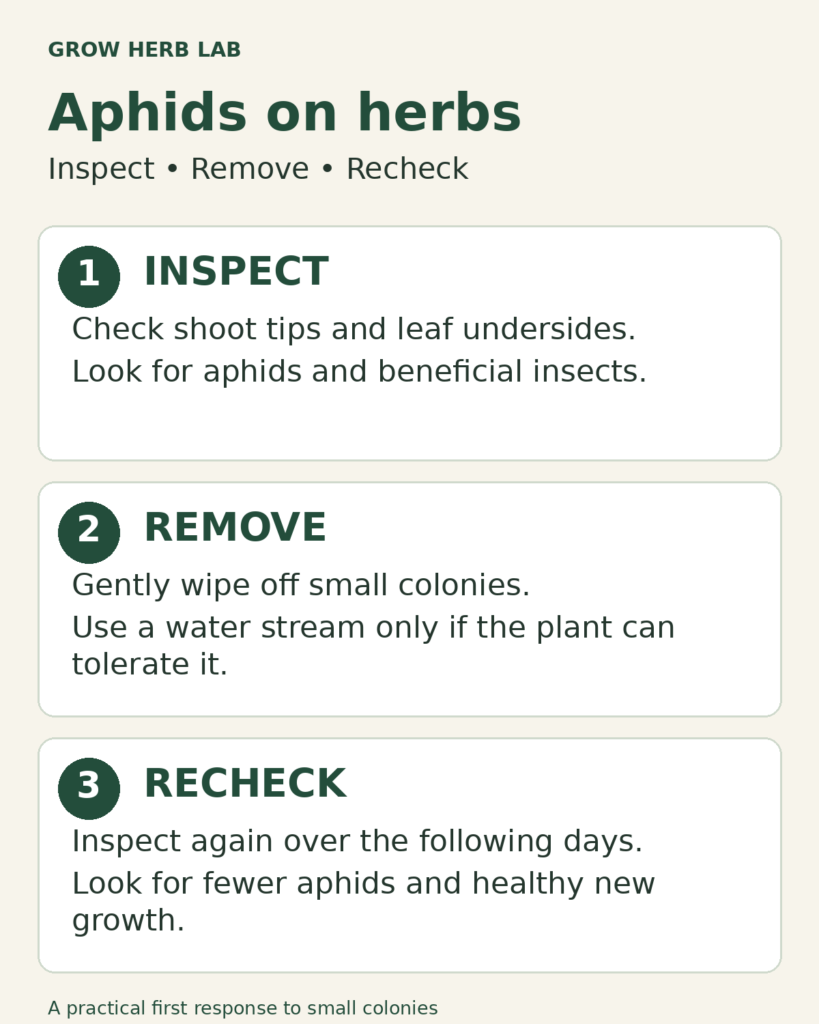
Check several shoots, including leaf undersides. Note whether the insects are increasing, whether new growth is distorted, and whether predators are present. Repeat the same check after your response so you can tell if it helped. Use fresh growth as the recovery indicator: an already curled leaf may remain distorted.
Remove small colonies first
For a small outbreak, gently wipe or pinch off aphids while supporting the shoot. On sturdy herbs, use a directed stream of water to dislodge them, concentrating on occupied stems and leaf undersides. Reduce the pressure for delicate seedlings; the treatment should not tear the plant. Let excess water drain from pots and avoid turning pest control into repeated soaking of the root zone.
A heavily infested shoot may be removed if enough healthy foliage remains for recovery. Do not strip a small plant. Dispose of removed material away from healthy pots, clean your cutting tool, and inspect neighbouring herbs. Check again over the following days; one rinse is not a promise of permanent control.
Keep beneficial insects working
Ladybirds and their larvae, lacewing larvae, hoverfly larvae and small parasitic wasps can help reduce aphids. Their immature stages may look unfamiliar. Observe what an insect is doing before assuming that every creature on the plant is a pest. Swollen, brown aphids, often called aphid mummies, can be evidence of parasitic wasps at work. These are parasitised aphids, rather than an expanding colony of living pests.
Provide flowering plants and sheltered habitat, and avoid unnecessary broad-spectrum insecticides. Predators may take time to build up. If the herb is coping and colony numbers are falling, monitoring may be more useful than another treatment. If a young plant is deteriorating, remove aphids gently while keeping beneficial insects in mind.
Why ants matter
Ants collect honeydew and may protect aphids from predators. An ant trail is a reason to inspect, not an automatic reason to spray the herb. Review how ants reach a container, and avoid adding an unlabelled ant product to edible foliage. Control decisions should address both the aphid colony and any interference with natural enemies.
When a spray may be justified
If aphids continue to increase despite removal, or the plant is suffering, consider a registered garden product whose current directions cover the edible crop and pest. Commercial insecticidal soaps or horticultural oils are possible options for some situations; this does not mean every product is suitable for every herb.
Before use, check the crop, application rate, repeat interval, plant-sensitivity precautions, weather restrictions and harvest withholding period. Follow the label and any applicable permit. A withholding period is the interval between the last application and harvesting for food. Washing leaves is not a substitute for waiting that period.
Contact treatments depend on reaching the insects. Aphids sheltered inside curled leaves can be difficult to reach. Avoid spraying in conditions prohibited by the label, including heat or plant stress where specified, and keep treatments away from visiting beneficial insects. If the label requires a small-area test, allow its stated assessment time before broader use.
Do not improvise a dishwashing-liquid, vinegar or essential-oil recipe. Household ingredients do not provide a dependable plant-safe rate or edible-crop direction. “Natural” and “organic” also do not mean harmless to leaves, pollinators or people.
Prevent recurring outbreaks
Inspect new plants before placing them beside established herbs. Keep checking tender growth during rapid growth periods. Feed according to the herb’s needs rather than pushing excessive soft shoots. Give plants suitable light, root space and water so they can recover from modest damage. Keep the garden accessible enough to inspect leaves and harvest without breaking stems.
The aim is a productive herb garden, not an insect-free one. A response that removes predators as well as aphids may make later outbreaks harder to manage.
Troubleshooting after treatment
| Result | What to check next |
|---|---|
| Fewer insects, but old leaves remain curled | Inspect new shoots for recovery; old damage may persist. |
| Aphids return quickly | Check hidden colonies, nearby plants and ant activity. |
| Leaves scorch after spraying | Review the product, rate, weather and sensitivity directions before any further application. |
| Plant remains weak with few aphids | Check moisture, roots, light and other causes rather than escalating pesticide use. |
Frequently asked questions
Must I throw away an affected herb?
Usually a manageable colony does not require discarding the entire plant. Assess its condition and remove the pests. Severe persistent decline or an unidentified disease needs a separate diagnosis.
Can I harvest after treatment?
Follow the exact product label’s withholding period and harvest directions. Do not assume a spray suitable for ornamental plants is suitable for edible herbs.
Why are aphids still there after rinsing?
You may have missed protected colonies, or insects may have arrived from nearby plants. Reinspect before repeating or changing the response.
🌿 Grow Herb Lab Final Checklist
- Confirm the insect before treatment.
- Consider plant health, colony trend and beneficial insects together.
- Start with gentle removal or a water stream suited to the plant.
- Use only suitable labelled treatments when needed, and follow harvest restrictions.
- Judge recovery by healthy new growth.
Continue learning
If aphids are only part of a bigger plant problem, continue troubleshooting with Why Your Herbs Keep Dying and Yellow Leaves on Herbs. The Herb Watering Guide can help you assess moisture before adding more water to a stressed plant.