Introduction
Herb watering problems can be surprisingly difficult to diagnose.
A wilted plant may need water — but it may also be sitting in waterlogged soil. Yellow leaves can develop when roots stay too wet, but they can also appear when a plant has become severely dry. Crispy leaves may suggest drought, yet damaged roots can prevent a herb from taking up water even when the soil is moist.
That is why symptoms alone are not enough.
The most reliable approach is to investigate what is happening around the plant, especially in the root zone, before changing your watering routine.
When troubleshooting a herb, work through these five areas:
Soil → Roots → Drainage → Environment → Herb
Check:
- whether the growing medium is actually wet or dry;
- whether the roots appear healthy;
- whether excess water can drain freely;
- whether heat, wind, light or recent weather has changed how quickly the plant uses water;
- and whether the particular herb naturally prefers wetter or drier growing conditions.
This guide covers common herb watering problems — including persistent wilting, soil that stays wet, pots that dry too quickly, yellow or crispy leaves, drainage problems, mould, fungus gnats and plants that seem to decline after watering.
The objective is not to water more or less automatically.
It is to identify what is actually happening, then correct the cause.
Quick Facts — Herb Watering Problems
| Question | Quick Answer |
|---|---|
| What should I check first when a herb looks stressed? | Check the moisture in the root zone before deciding whether to water. |
| Does wilting always mean a herb is too dry? | No. Herbs can wilt when soil is too dry or when persistently wet conditions interfere with healthy roots. |
| Why does my herb keep wilting after watering? | Check whether the soil is staying wet, drainage is poor, roots are damaged, or the pot is drying unusually quickly. |
| What if the soil stays wet for days? | Check drainage, pot size, growing-medium condition, temperature, light and whether water is trapped around the container. |
| What if the pot dries extremely quickly? | Check pot size, root congestion, heat, wind, container material and whether water is reaching the entire root ball. |
| Do yellow or crispy leaves prove a watering problem? | No. Use leaf symptoms together with soil, root and environmental evidence. |
| When should I suspect root rot? | Persistent wet soil combined with declining growth, wilting, yellowing, soft growth, damaged roots or an unpleasant smell warrants further investigation. |
| What is the main troubleshooting rule? | Diagnose first. Change watering second. |
Herb Watering Troubleshooting Guide
Even with a good watering system, herbs occasionally develop symptoms that appear to be related to moisture.
The important thing is not to react to one symptom in isolation.
A drooping plant may be dry.
It may also be waterlogged, overheated, recently transplanted or suffering from root damage.
Use the symptom as the starting point for investigation, then check:
Soil → Roots → Drainage → Environment → Herb
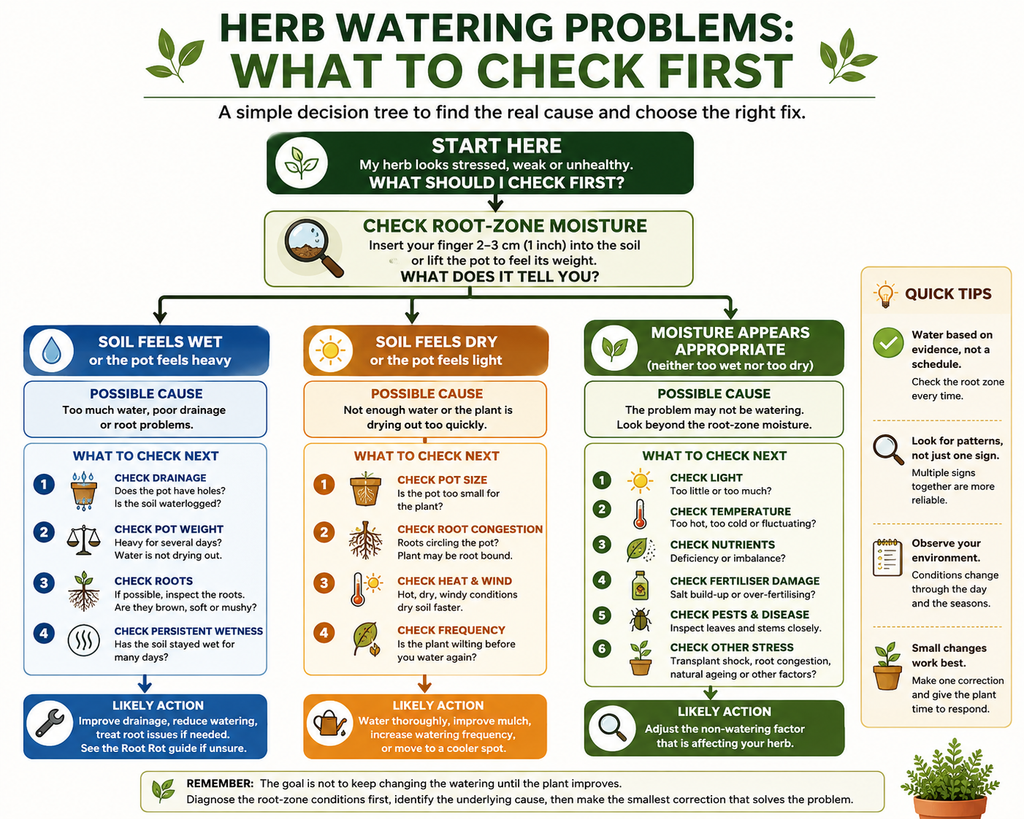
Troubleshooting Wilting and Drooping Herbs
Wilting does not automatically mean a herb needs more water.
The timing of the wilting, the condition of the soil and what happens after watering provide much better diagnostic clues.
Use the sections below to identify which pattern best matches your plant.
My Herb Is Wilting Even Though I Just Watered It
Wilting shortly after watering does not necessarily mean the herb needs more water.
If a herb wilts shortly after watering, do not immediately water it again.
First check the growing medium.
If the soil is wet
Possible causes include:
- Poor drainage.
- Excessively frequent watering.
- Root stress.
- Root rot.
- Heat stress.
- Transplant shock.
Check whether water can escape freely from the container.
If the soil remains persistently wet and the plant continues declining, root inspection may be necessary.
If the soil is already dry again
Possible causes include:
- A very small container.
- A root-bound plant.
- Hydrophobic growing medium.
- Water bypassing the root ball.
- Strong heat or wind.
- An unusually thirsty, actively growing plant.
The solution depends on why the root zone is drying so quickly.
My Herb Wilts Every Day
If a herb wilts every day, do not assume that more frequent watering is automatically the solution.
Possible causes include:
- Container too small.
- Root-bound growth.
- Growing medium drying too quickly.
- Excessive heat.
- Strong wind.
- Insufficient watering.
- Hydrophobic potting mix.
- Root damage.
Do not simply assume:
“This herb needs watering every day.”
Ask why it is losing access to moisture so rapidly.
If the underlying problem is an undersized container, increasing watering frequency indefinitely is not the best solution.
My Herb Recovers After Watering but Wilts Again Quickly
If a herb visibly improves after watering but becomes wilted again unusually soon, genuine rapid drying is more likely.
Investigate:
- Pot size.
- Root-bound growth.
- Heat.
- Wind.
- Growing-medium condition.
- Plant size.
For a large, healthy herb in a small container, the correct long-term solution may be repotting, not simply watering several times every day.
My Herb Looks Worse After Watering
If deterioration repeatedly follows watering, investigate:
- Whether the soil was already wet.
- Whether the pot drains.
- Whether water is trapped in a saucer or outer pot.
- Whether the container is oversized.
- Whether roots are damaged.
Water itself is not the problem. The issue is usually the moisture conditions created around the roots.
My Herb Droops During Hot Afternoons
Some plants temporarily droop during intense heat even when adequate moisture remains in the root zone.
Before watering:
- Check the soil.
- Consider the temperature.
- Consider direct sun exposure.
- Recheck the plant as conditions cool.
If the soil is still adequately moist, automatically adding more water may not help.
Repeated severe heat stress may require changes to the growing environment rather than simply more frequent watering.
This is especially important for containers exposed to intense reflected heat from paving, walls or glass.
Troubleshooting Soil, Pots and Drainage
Many recurring watering problems are caused by the container or growing medium rather than by the amount of water applied.
Check how long the root zone stays wet, how quickly the pot becomes light, whether water moves evenly through the growing medium and whether excess water can escape.
My Herb’s Soil Is Always Wet
Growing medium that remains wet for an unusually long time deserves attention.
Possible causes include:
- Watering too frequently.
- Poor drainage.
- Blocked drainage holes.
- An oversized container.
- Dense or compacted growing medium.
- Low light.
- Cool temperatures.
- Reduced seasonal growth.
- Water collecting inside an outer pot.
What to do
Do not water again simply because the usual watering day has arrived.
Check the drainage system and growing conditions.
Allow the growing medium to begin drying to the level appropriate for the herb.
If the plant is also developing:
- Yellow leaves.
- Persistent wilting.
- Weak growth.
- Soft stems.
- Unpleasant-smelling soil.
investigate the roots for possible damage.
My Herb’s Soil Dries Extremely Quickly
Rapid drying is not necessarily a watering failure.
It may indicate that the plant’s growing environment has changed.
Investigate:
- Pot size.
- Root congestion.
- Container material.
- Temperature.
- Sunlight.
- Wind.
- Plant size.
- Growing-medium condition.
A large basil plant in a small terracotta pot during hot weather can use available moisture very quickly.
If a container repeatedly becomes severely dry despite appropriate watering, first investigate why it is drying so quickly. Increasing watering frequency may only be a temporary solution.
The longer-term solution may be:
- Repotting.
- Using an appropriately larger container.
- Replacing deteriorated growing medium.
- Reducing extreme heat exposure.
- Protecting the container from excessive drying wind.
Water Runs Straight Through the Pot
Water rapidly escaping from the drainage holes can create the impression that the plant has been thoroughly watered.
But the root ball may still contain dry areas.
This often happens when:
- Potting mix has become extremely dry.
- The mix has shrunk away from the container walls.
- Water follows channels through the growing medium.
- The plant is severely root-bound.
Check the pot afterwards
If it still feels unusually light, the root zone may not have absorbed enough moisture.
Try:
- Applying water slowly.
- Waiting briefly.
- Watering again.
- Checking whether the growing medium is becoming evenly moist.
For a container with severely dried growing medium, temporary bottom watering can help rehydrate the root ball more evenly. Remove the pot once the growing medium has absorbed moisture, then allow it to drain thoroughly.
Water Sits on Top of the Soil
Water that remains on the surface instead of moving through the container can indicate:
- Compacted growing medium.
- Poor soil structure.
- Deteriorated potting mix.
- Severe root congestion.
- Blocked drainage.
Do not continue pouring water onto the surface.
Investigate why the water is not moving through the root zone normally.
If the growing medium has badly deteriorated or severe root congestion is preventing normal water movement, repotting into an appropriate fresh mix and container may be necessary.
The Pot Feels Heavy for Days
A container remaining heavy long after watering suggests that moisture is leaving the growing medium slowly.
Possible reasons include:
- Large pot size.
- Moisture-retentive growing medium.
- Low light.
- Cool weather.
- Low plant water use.
- Poor drainage.
Do not water simply because several days have passed.
Wait until the root zone reaches an appropriate moisture level for that herb.
The Pot Becomes Light Very Quickly
If a container becomes noticeably light soon after watering, check whether:
- The herb is large relative to its pot.
- Roots densely fill the container.
- The pot is porous.
- Conditions are hot or windy.
- Water is bypassing dry parts of the root ball.
This information helps determine whether the plant genuinely needs more frequent watering or whether the container system needs correcting.
Troubleshooting Yellow, Brown and Crispy Leaves
Leaf symptoms can provide useful clues, but they should never be used alone to diagnose a watering problem.
Yellow, brown or crispy foliage can develop when a herb is too dry, when the root zone stays too wet, or when another stress is affecting the plant.
Check the soil and root-zone conditions before deciding that the plant needs more water.
My Herb Has Yellow Leaves
Yellow leaves can occur with both excessively wet and very dry root zones, but yellowing alone does not diagnose a watering problem.
Yellow leaves + wet soil
Investigate:
- Overwatering.
- Poor drainage.
- Root stress.
- Root rot.
Yellow leaves + very dry soil
Investigate:
- Underwatering.
- Heat stress.
- Rapid container drying.
- Root-bound growth.
Yellow leaves + appropriate moisture
Investigate other possibilities, including:
- Light.
- Nutrients.
- Temperature.
- Transplant stress.
- Pests.
- Disease.
- Natural leaf ageing.
Related guide: Why Are My Herb Leaves Turning Yellow?
My Herb Has Brown or Crispy Leaves
Brown or crispy leaves often develop after moisture loss or drying stress, but they do not automatically mean the root zone is currently too dry.
Possible causes include:
- Underwatering.
- Repeated severe drying.
- Hot drying wind.
- Excessive heat.
- Sun scorch.
- Salt accumulation.
- Fertiliser damage.
- Root damage.
Check the soil first.
If it is severely dry and the pot is very light, inadequate moisture becomes more likely.
If the growing medium is wet, do not assume crispy leaves mean the plant needs more water.
Damaged roots can also interfere with water uptake.
The Soil Is Wet but the Leaves Are Crispy
This combination can be confusing.
Possible explanations include:
- Previous drought damage that cannot reverse.
- Root damage preventing normal water uptake.
- Fertiliser or salt injury.
- Heat or sun damage.
- Disease.
- A combination of stresses.
Do not keep adding water because the leaves look dry.
The current condition of the root zone matters more than the appearance of already damaged foliage.
Environmental and Herb-Specific Watering Problems
Sometimes the strongest clue is not wilting or leaf colour, but what is happening around the plant.
Persistent surface moisture, fungus gnats, heat, light, airflow and the natural moisture preferences of different herbs can all help explain why a watering routine is not working.
Do not assume every herb should be watered in the same way.
There Is Mould or Algae on the Soil Surface
A small amount of surface growth does not automatically mean the plant has root rot.
However, persistent algae or mould can indicate that the surface remains moist for long periods.
Investigate:
- Watering frequency.
- Airflow.
- Light.
- Drainage.
- Growing-medium condition.
Do not treat the visible surface growth while ignoring the conditions that allowed it to develop.
Fungus Gnats Keep Appearing Around My Herbs
Fungus gnats are commonly associated with moist organic growing media.
Adult gnats around container herbs can therefore be another clue that the growing medium is remaining consistently moist.
Their presence does not prove overwatering, but it should prompt you to check:
- How long the pot stays wet.
- Drainage.
- Watering frequency.
- Organic material on the surface.
Correcting excessive moisture can form part of the management strategy.
My Mediterranean Herb Keeps Declining
For rosemary, thyme, lavender, oregano and similar herbs, check whether the growing medium remains wet for too long.
These herbs generally prefer more drying between waterings than basil, mint or parsley.
Common problems include:
- Watering all herbs on the same schedule.
- Moisture-retentive growing medium.
- Poor drainage.
- Oversized containers.
- Low-light indoor conditions.
- Excessive rainfall.
If the soil is persistently wet, adding more water is unlikely to help.
My Basil or Mint Keeps Drying Out
Leafy herbs such as basil and mint can use substantial amounts of water during active growth.
If they repeatedly become severely dry, investigate:
- Container size.
- Root congestion.
- High temperatures.
- Strong sunlight.
- Wind.
- Pot material.
These herbs generally prefer more consistent moisture than Mediterranean herbs.
However:
consistent moisture ≠ permanent saturation
Drainage still matters.
Herb Watering Problems — Quick Diagnosis Table
Use this table when you need a fast starting point. Match the visible symptom with the condition of the soil or pot, then investigate the suggested cause before changing your watering routine.
| Symptom | Check First | Possible Explanation | First Response |
| Wilting + dry soil | Root-zone moisture | Underwatering | Water thoroughly if appropriate |
| Wilting + wet soil | Drainage and roots | Excess moisture, poor drainage or root stress | Stop unnecessary watering and investigate |
| Yellow leaves + wet soil | Roots and drainage | Excess moisture, poor drainage or root problems | Allow appropriate drying and inspect if decline continues |
| Yellow leaves + dry soil | Moisture and environment | Underwatering/heat stress | Rehydrate appropriately and investigate rapid drying |
| Crispy leaves + dry soil | Moisture | Drought stress | Water appropriately |
| Crispy leaves + wet soil | Roots/environment | Previous damage or root dysfunction | Do not automatically add water |
| Pot always heavy | Drainage and conditions | Slow drying | Extend interval and investigate cause |
| Pot quickly becomes light | Pot size and roots | Rapid drying/root-bound growth | Check more often and assess container |
| Water runs straight through | Root ball and mix | Hydrophobic mix/channelling | Rewet slowly in stages |
| Water pools on surface | Growing medium | Compaction/poor drainage | Investigate mix and drainage |
| Mould/algae on surface | Moisture and airflow | Persistently damp conditions | Reassess watering/environment |
| Daily wilting | Pot, roots and weather | Small pot/heat/root congestion | Correct underlying cause |
| Decline after watering | Existing moisture | Soil already wet, poor drainage or trapped water | Check before next watering |
| Wet soil + bad smell | Roots | Possible root decay | Inspect roots |
| Slow growth + wet soil | Light, roots and moisture | Low water use/root stress | Correct growing conditions |
Important: These combinations are diagnostic clues, not definitive diagnoses. If symptoms persist or several warning signs occur together, investigate the roots, drainage and wider growing conditions.
When the Problem Is More Than Watering
Sometimes changing how often you water is not enough.
Persistent decline can indicate damaged roots, poor drainage or another growing problem that only resembles watering stress. The following checks help determine when to investigate beyond the watering routine.
When to Suspect Root Rot
Root rot becomes more likely when several warning signs occur together:
- Soil remains persistently wet.
- Plant wilts despite wet soil.
- Yellowing increases.
- Growth declines.
- Stems soften.
- Roots become brown, dark, soft or mushy.
- The root zone develops an unpleasant smell.
If several of these warning signs occur together, inspect the root system rather than simply changing the watering schedule. If root rot is suspected, use the dedicated Root Rot guide for diagnosis and treatment.
Related guide: Root Rot in Herbs: The Complete Guide to Diagnosis, Treatment and Prevention
When Watering May Not Be the Problem
If moisture appears appropriate but the herb continues declining, broaden the diagnosis.
Investigate:
- Light.
- Temperature.
- Nutrients.
- Fertiliser damage.
- Pests.
- Disease.
- Transplant stress.
- Root congestion.
- Natural ageing.
This prevents a common mistake:
Trying to solve every herb problem with the watering can.
Watering is important, but it is only one part of plant health.
The Rule That Prevents Most Watering Mistakes
Before adding water to a struggling herb, answer one question:
What evidence tells me this plant actually needs water?
If the only evidence is:
“It looks unhappy”
you have not diagnosed the problem yet. Check the root zone first.
Where to Go Next
Once you identify the pattern behind a watering problem, use the next guide that best matches what you found.
- Unsure whether the herb is too wet or too dry? Read Overwatering vs Underwatering Herbs: How to Tell the Difference.
- Soil stays wet and the roots may be damaged? Read Root Rot in Herbs: The Complete Guide to Diagnosis, Treatment and Prevention.
- Yellow leaves are the main symptom? Read Why Are My Herb Leaves Turning Yellow?
- Need to improve your general watering routine? Read How Often Should You Water Herbs?
- Growing in pots, indoors or outdoors? Read How to Water Herbs in Pots, Indoors and Outdoors.
The goal is not to keep changing the watering schedule until the plant improves. Diagnose the root-zone conditions first, identify the underlying cause, then make the smallest correction that solves the problem.